Manatees in Florida – where you can see the gentle sea cows

Many Florida visitors dream of seeing manatees in the wild at least once. These gentle sea cows gather in warm springs, rivers and bays – especially in winter. In this guide you’ll learn where to see manatees in Florida, when the best time of year is and which rules you should follow to protect them.
Whether snorkeling, kayaking or from the comfort of a promenade: An encounter with the manatee remains unforgettable. It is one of the most magical nature experiences in the Sunshine State.
The gentle manatees show Florida from its most peaceful side. Those who treat the animals with care and respect help to ensure that future generations can also experience these wonderful animals.
The Manatee family of sirens
The term manatee refers to a genus of round-tailed manatee that belongs to the sirenian family. Only West Indian manatees (Trichechus manatus) live in Florida. Despite their size, they are extremely peaceful, have a purely plant-based diet and spend most of their day eating, dozing and swimming slowly.
Where to see manatees in Florida – the main spots
Why are there so many manatees in Florida? The answer lies in the climate and the natural conditions: Florida manatees need warm water – below 68 °F it becomes life-threatening for them. In the winter months, they therefore seek out warm springs or shallow estuaries. Places such as these are particularly known for their high manatee density:
- Crystal River & Three Sisters Springs – probably the most famous place to snorkel with manatees, with many animals in the warm springs during winter.
- Blue Spring State Park – winter refuge for hundreds of manatees, with boardwalks and viewing platforms along the river.
- Manatee Park in Fort Myers – small, family-friendly park where manatees gather in the warm discharge canal on cold days.
- Weeki Wachee River – crystal-clear river where you can quietly paddle past manatees by kayak or SUP.
- Homosassa Springs Wildlife State Park – protected area with underwater viewing windows and information about rescued and rehabilitated manatees.
Crystal River and Homosassa Springs are the only places where swimming with manatees is legal. Water remains near 72°F year-round. Many of these areas are designated as sanctuaries. Boats must navigate particularly carefully here to avoid injuring the slow animals.
Manatee watching in Florida – the best tips
 Thirsty manatees with baby
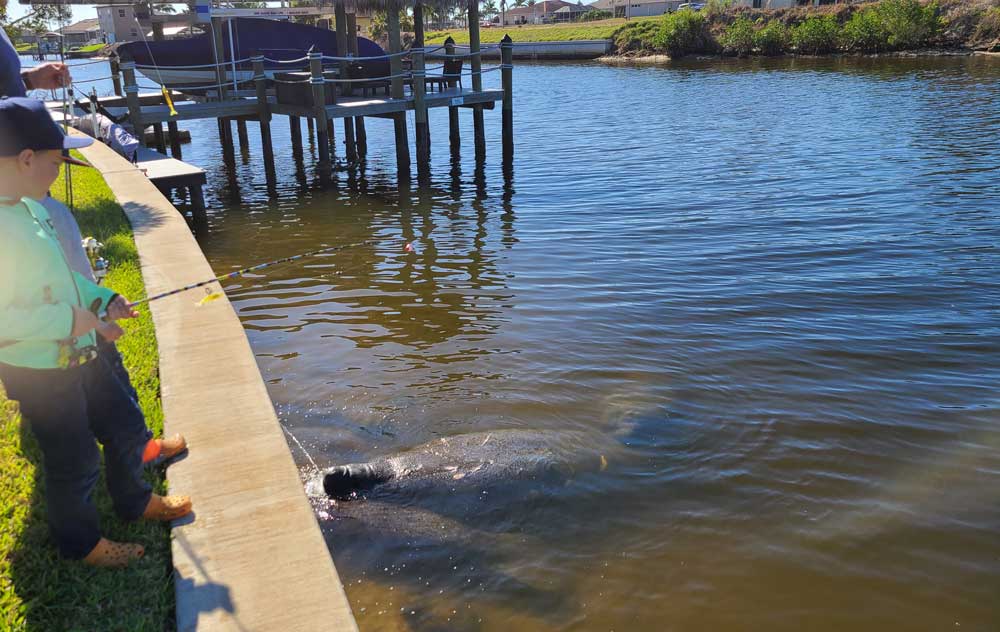
 Do not touch, even if it is a tame manatee.
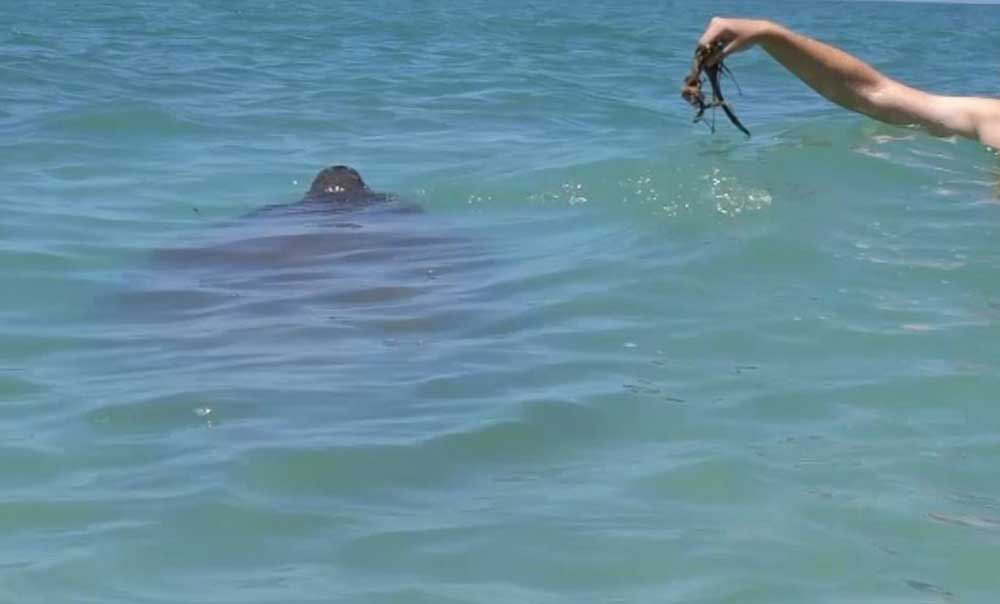 Manatee whisperer in Cayo Costa State Park
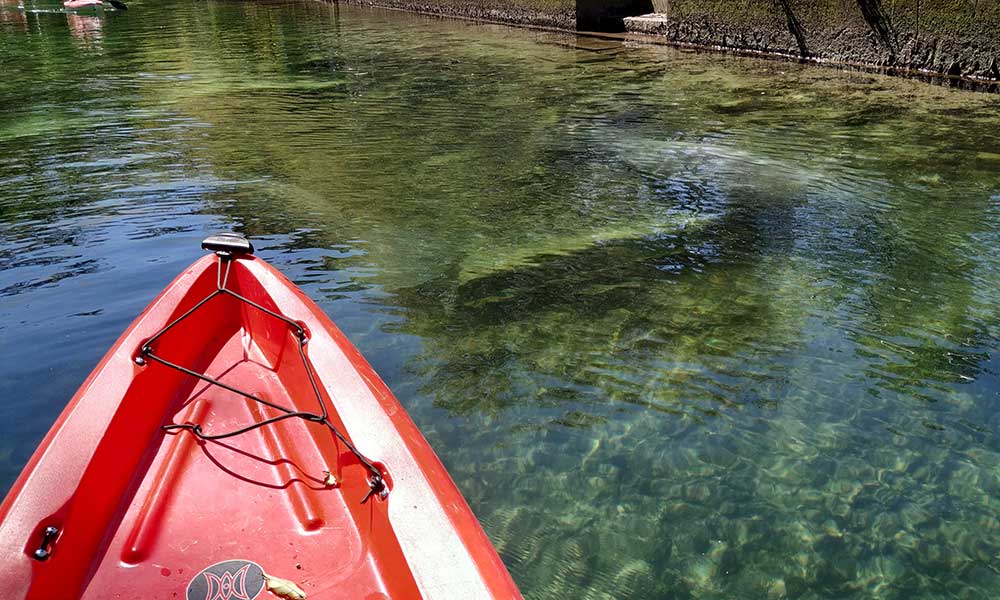 Mit etwas Glück begleiten einen die Manatees.
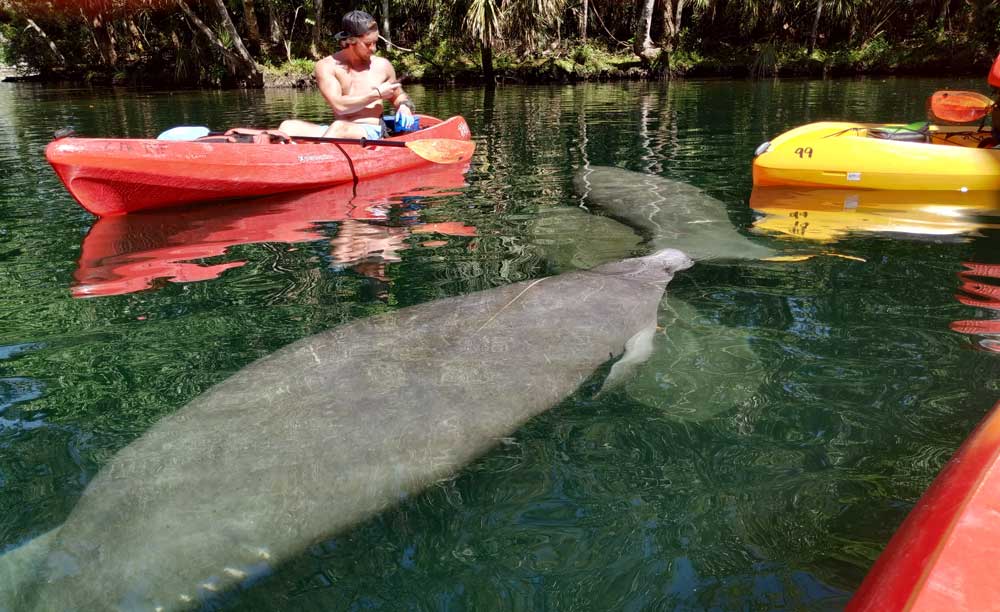 A kayak trip on the Weeki Wachee River is an incredible experience
If you want to see manatees in Florida, you have numerous options – whether guided excursions or on your own. Here are some recommendations:
1. guided manatee tours
Guided snorkeling tours are offered in places like Crystal River. Wearing a wetsuit and mask, you can glide into the crystal-clear water and encounter the animals in the wild – naturally under strict conditions to protect the animals.
2nd kayak tour on the Weeki Wachee River
If you prefer to be quiet, you can paddle through the river landscape in a kayak. In the early hours of the morning and especially in the winter months, the animals can be seen close to the banks.
3. observation platforms
Some parks offer raised platforms or boardwalks with the best view of the manatees. This is great for families with children or people who don’t want to get into the water, and information is provided free of charge.
4. in the Gulf of Mexico
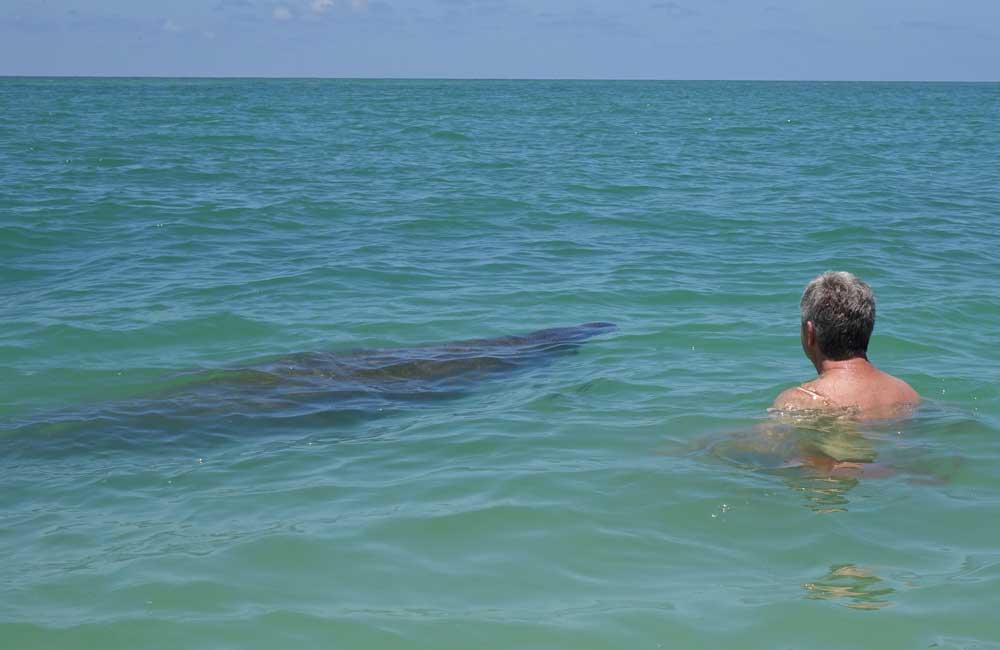
Sometimes, if you’re lucky, a manatee swims very close to you while you’re splashing around in the sea. We have experienced this ourselves on a beach in southwest Florida. It’s not shy at all and seems as if it wants to play with you – a breathtaking experience.
Best time of year, water temperature and time of day
Best time of year: Your best chances to see many manatees are from November to March, when the Gulf of Mexico cools down and the animals move into warm springs.
Water temperature: Below around 20 °C (68 °F) it gets too cold for manatees – they then gather at spots like Crystal River, Blue Spring or Manatee Park.
Time of day: The early morning or quiet weekdays are ideal, with less boat traffic and calmer conditions for watching the animals.
Protecting the Florida Manatee – a joint task
Despite their iconic status, manatees are under threat. Boating accidents, loss of habitat and, in recent years, algae blooms (red tide) are putting pressure on the population. In Florida, there are therefore numerous initiatives to protect the manatees – from awareness campaigns to no-go zones for boats in the vicinity of manatees.
Some simple rules of conduct for vacationers:
- Never touch or feed manatees
- Keep your distance – at least 3 meters
- Do not block the path or encircle the animals
- No fast movements or loud noises
- Only observe passively while snorkeling
- Drive the boat at walking speed in designated zones

Interesting facts about manatees
Manatees reach a length of up to 3.5 meters and usually weigh 400-600 kilograms, in exceptional cases even over 1,300 kilograms. They can live to be 40 to 60 years old if they do not die prematurely due to illness or accidents.
The peaceful herbivores consume up to ten percent of their body weight in seagrass and aquatic plants every day and spend up to eight hours a day eating. The rest of the day is usually spent dozing in shallow water.
Manatees do not sleep in one piece like we do, but in short phases in which they repeatedly come to the surface to breathe – about every three to five minutes.
Reproduction takes place all year round, with a single calf being born after a gestation period of around 12 months. The mother nurses it for up to two years and teaches it all the important survival skills during this time.
The dentition of manatees is striking: they do not have incisors, but so-called “wandering teeth” – molars that move forward from the back to the front throughout their lives, while the front teeth fall out.
Once upon a time there was a manatee called Bruno
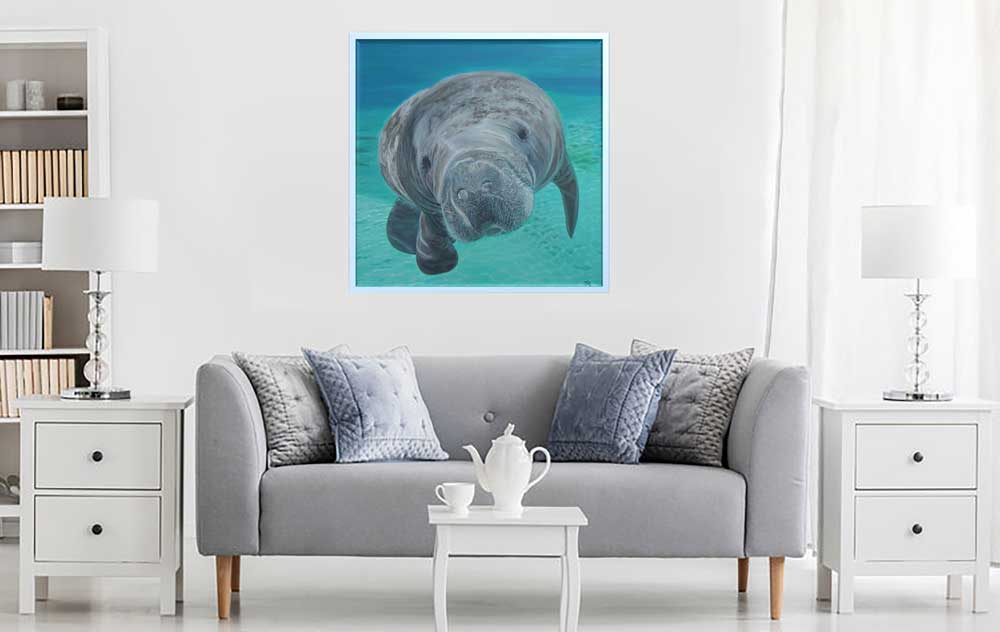
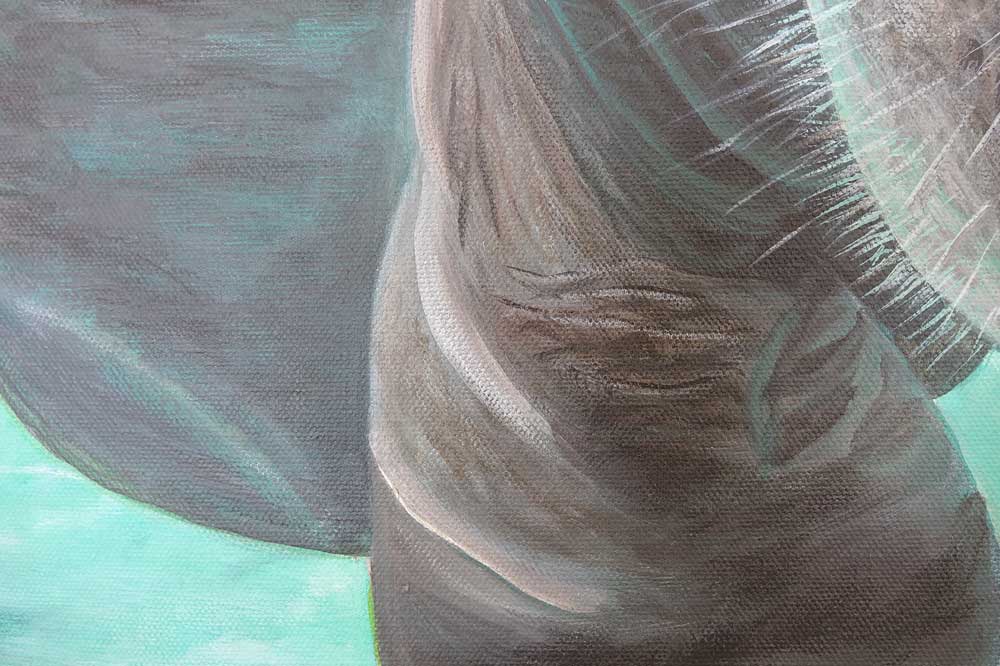
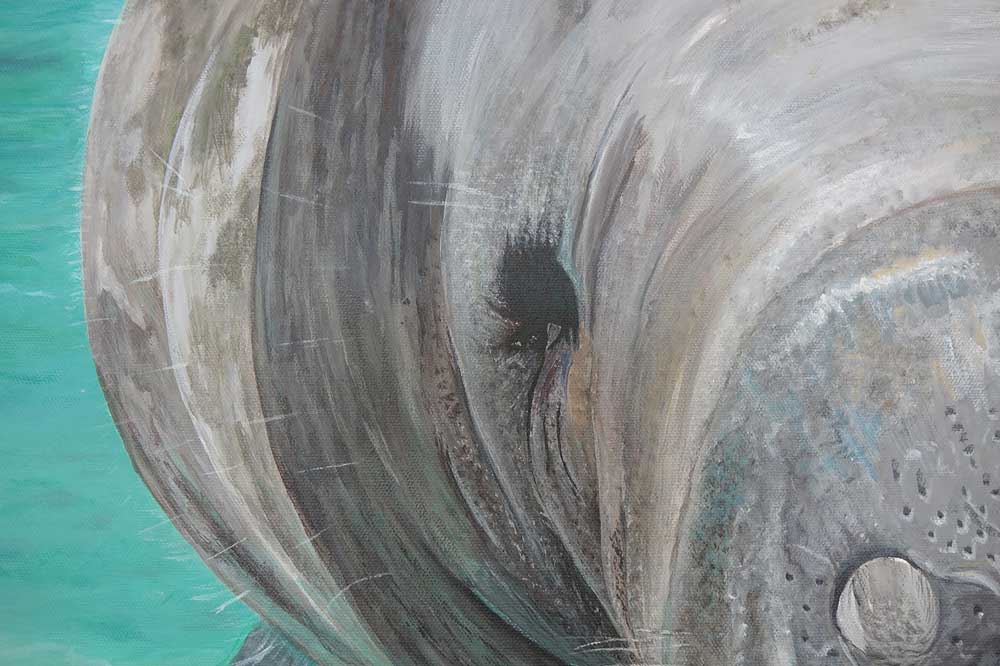
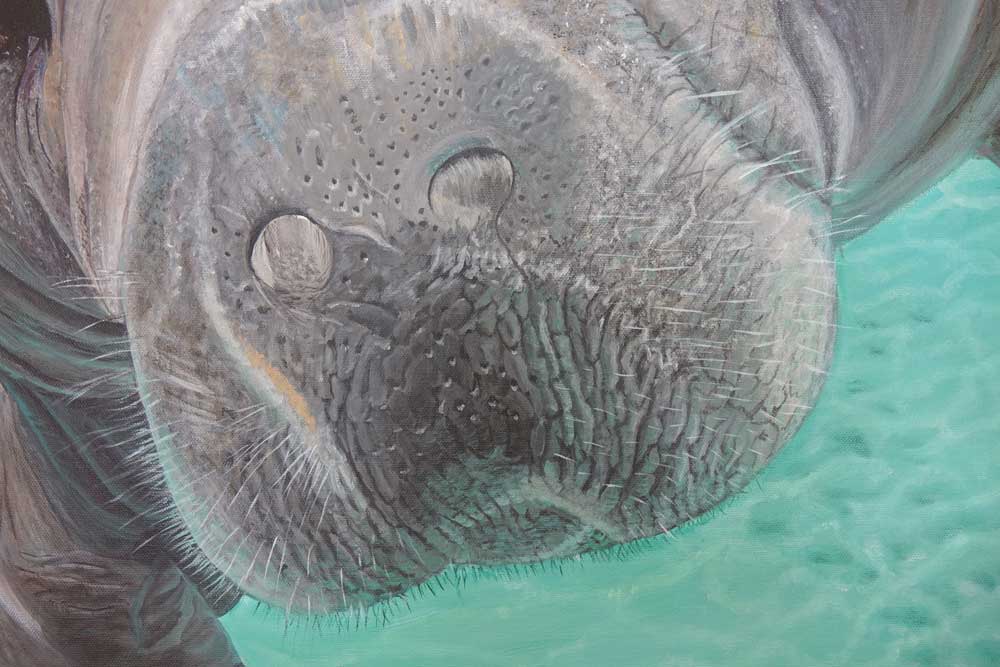
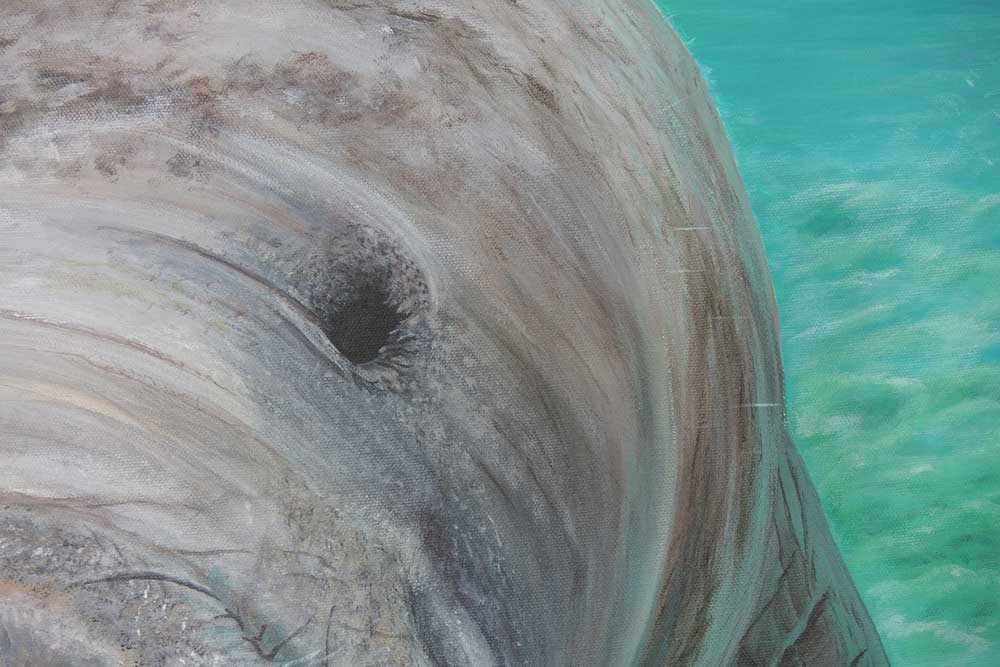
Once upon a time there was a manatee called Bruno. It was 36 x 36 inches and took about a week to float on the canvas. Then it hung happily on a wall in a house in Florida for a few years and delighted the guests.
It so happened that a gallery owner from Matlachee was interested in the manatee. She wanted to give him the opportunity to inspire someone else with the beautiful manatee on her wall in her house. So the manatee moved into the gallery of the gallery owner.
Unfortunately, it only stayed there for a short time – not because it was sold, but because the great Hurricane Ian gave it the opportunity to return to where it can swim with the mermaids and where it is at home. Luckily we took a photo beforehand and so you can all continue to marvel at it.