From Excavation to Spa Finish – Pool Construction in Florida
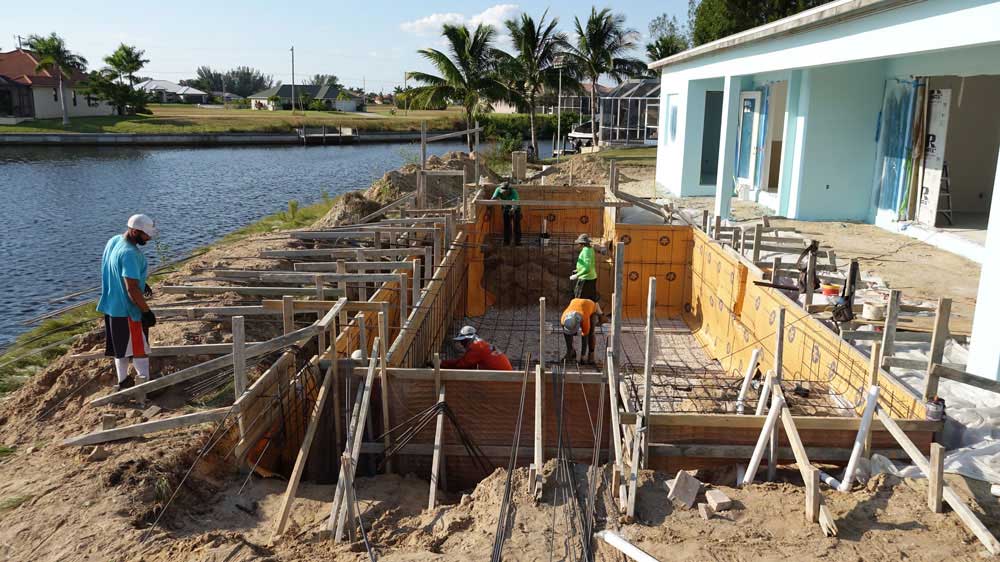

Pools define Florida living – the Infinity-Edge design blends luxury, relaxation, and modern aesthetics.
Long awaited and finally the time has come: the pool is being built. This is a highlight of the entire new build and requires many trades to work together. Not least because this construction phase ends with the completion of the entire lanai area, it brings us a big step closer to moving in. We build a negative edge pool with spa and convert the whole thing with a cage.
The building of our Infinity Edge pool is finally underway in Cape Coral and it is a really time-consuming process. Especially if you’re building an infinity pool like the one we want. This includes work such as: Excavating the earth, creating the pool shell, piping, applying the pool finish, installing the pool technology, flowing the pool, laying the stones for the pool terrace and building the cage. But let’s start from the beginning:
Earthworks for the pool shape
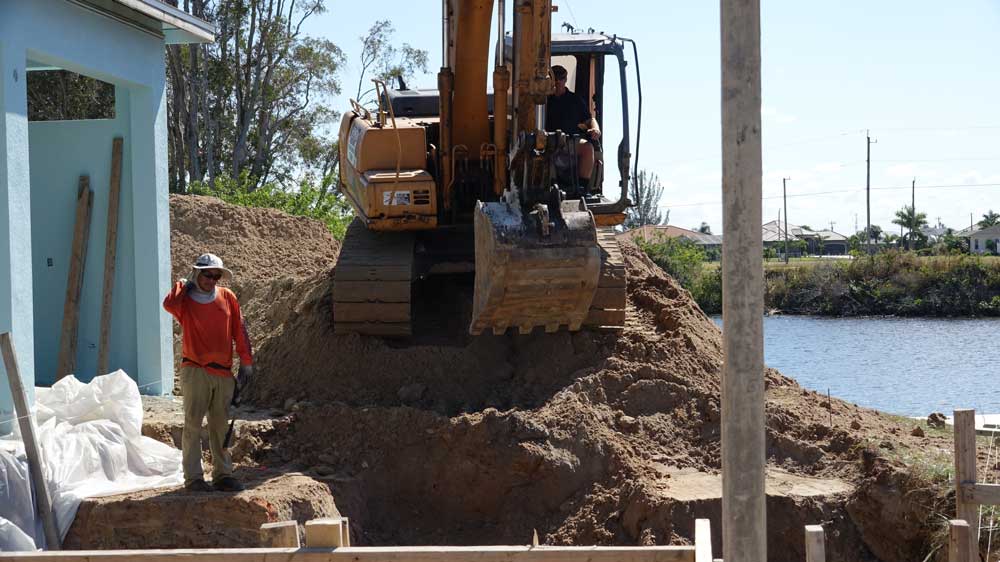 The excavator digs its way up a mountain.
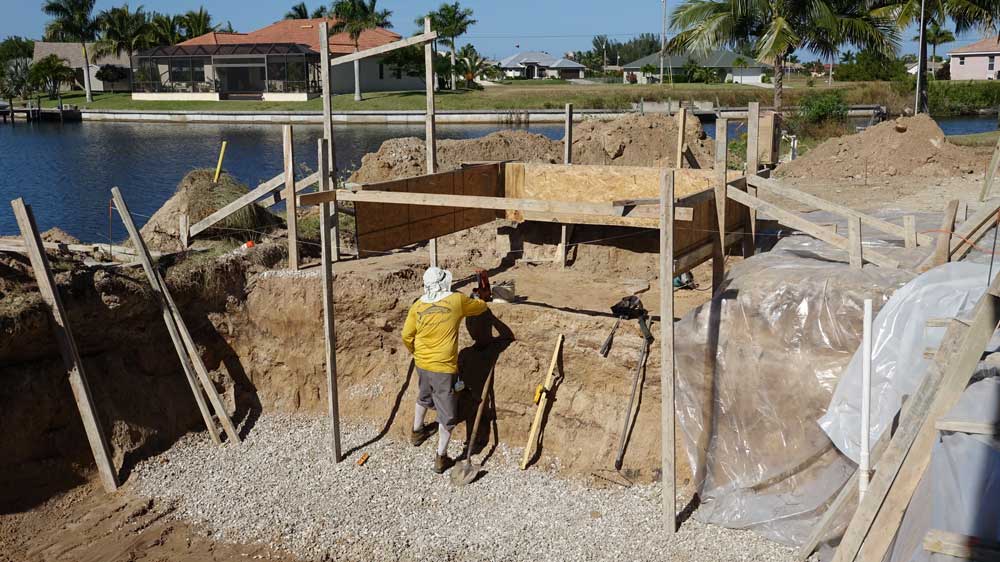
 The spa is simulated with wooden slats.
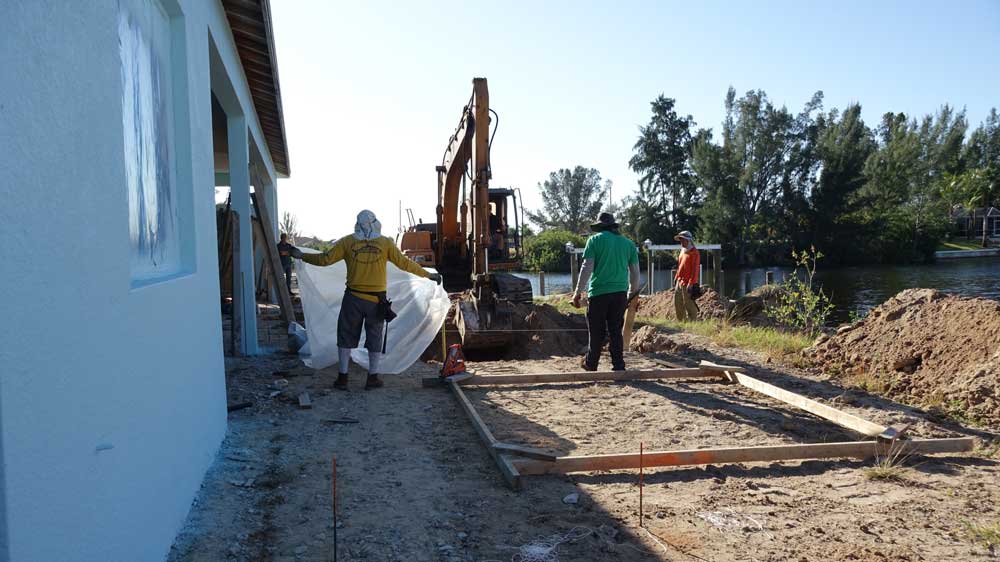
 The pool shape is marked out. A lot of measuring is done at the beginning.
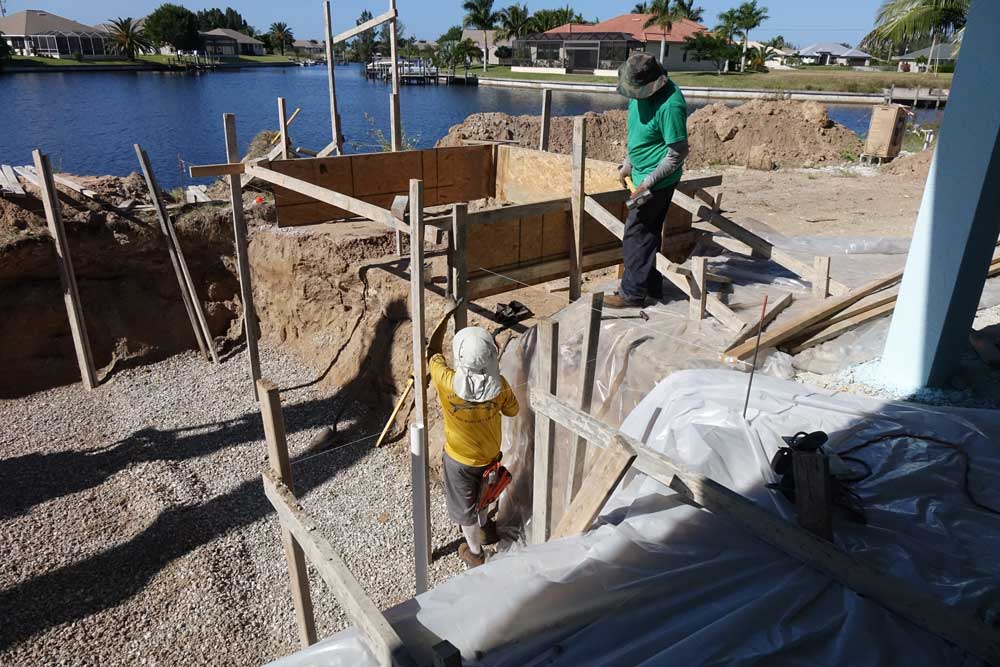 The film serves as a separating layer or protection.
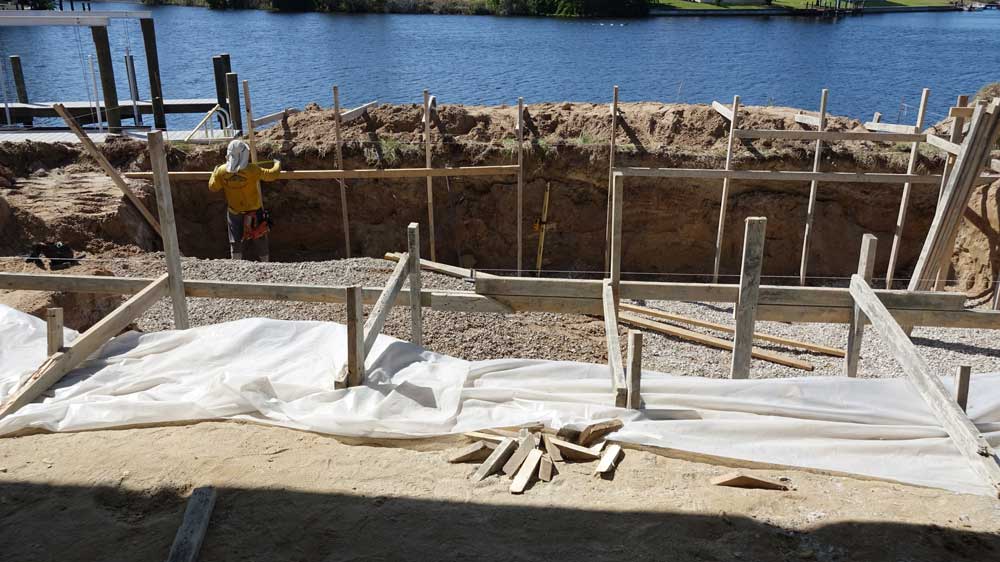 Timber stakes/formwork for height and contour control
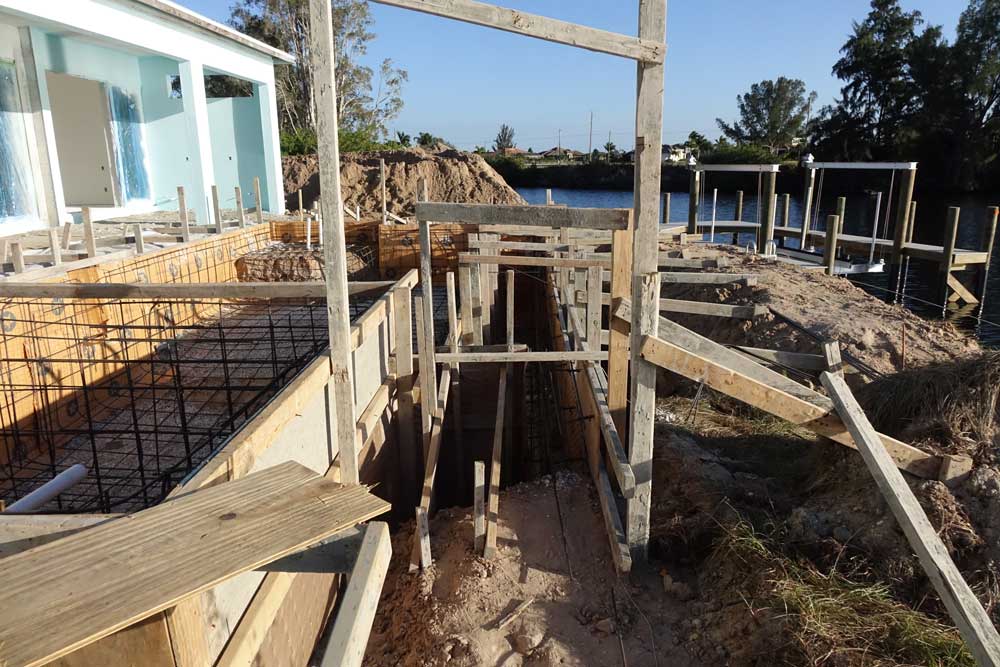 Negative edge formwork
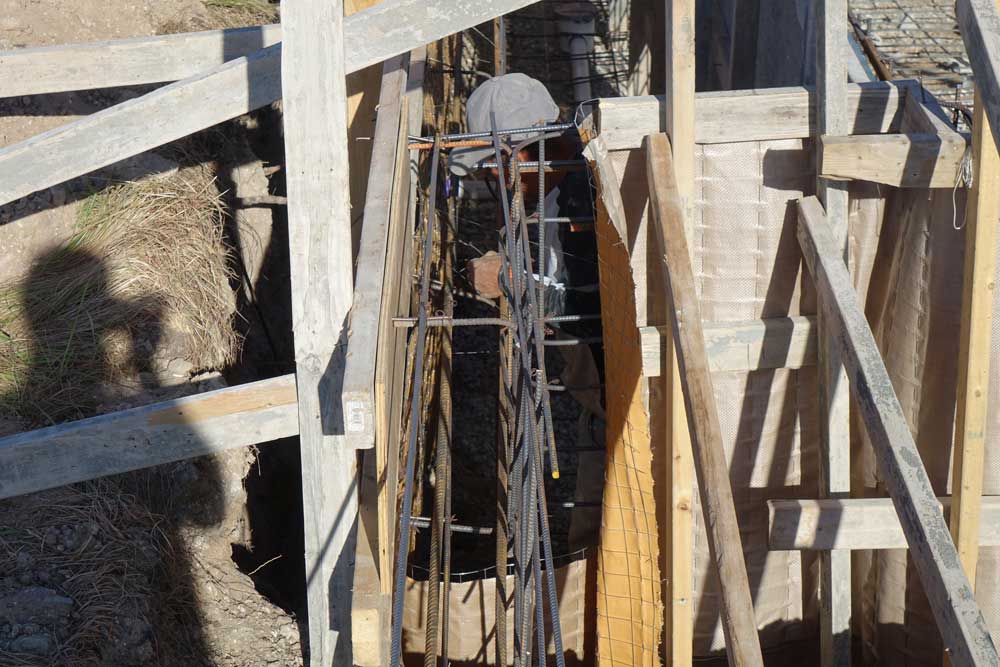 You could get claustrophobic.
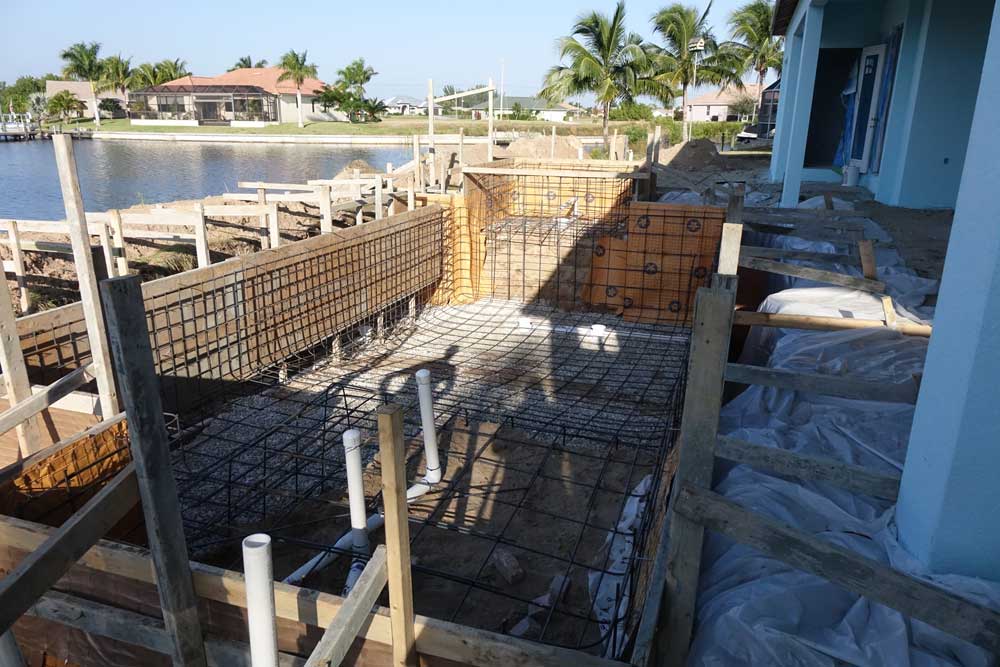 The spatial steel grid of reinforcing bars serves to stabilize the shape
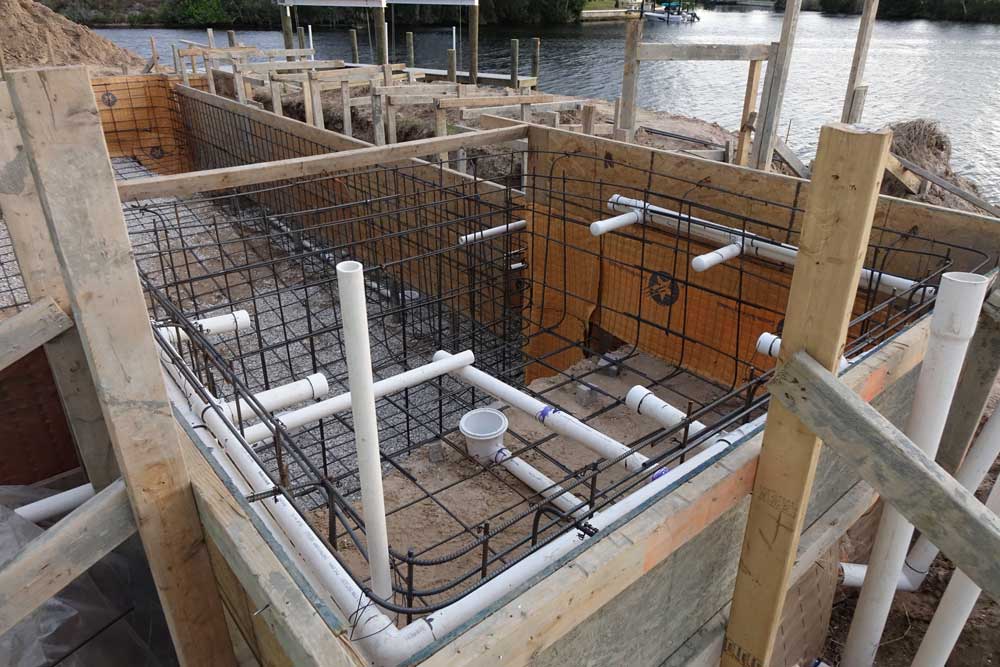 Laying pipes in the spa
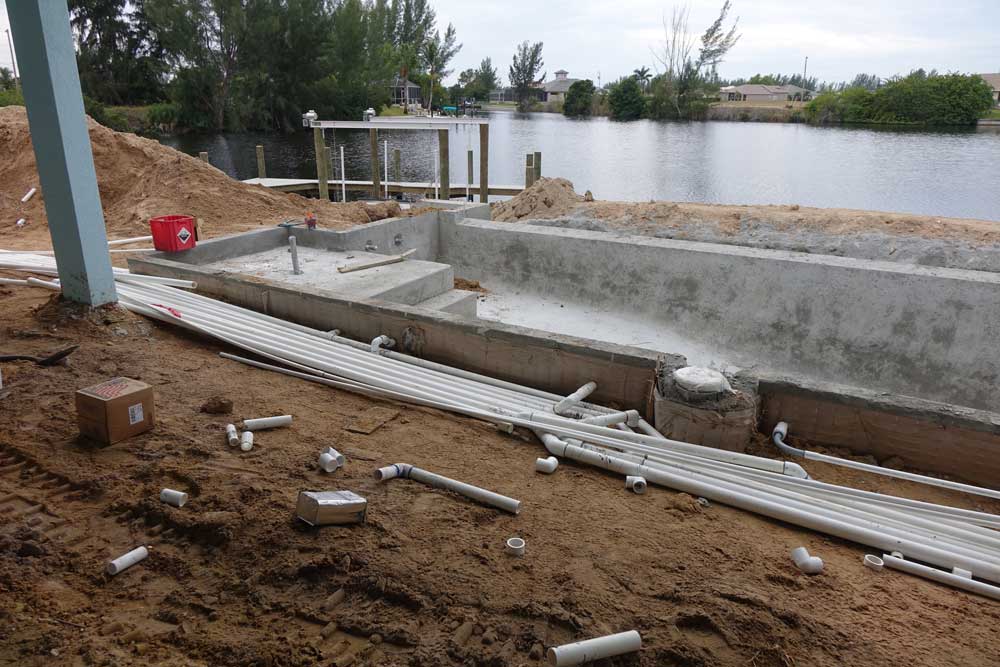 The pipes for the pool will be filled in later.
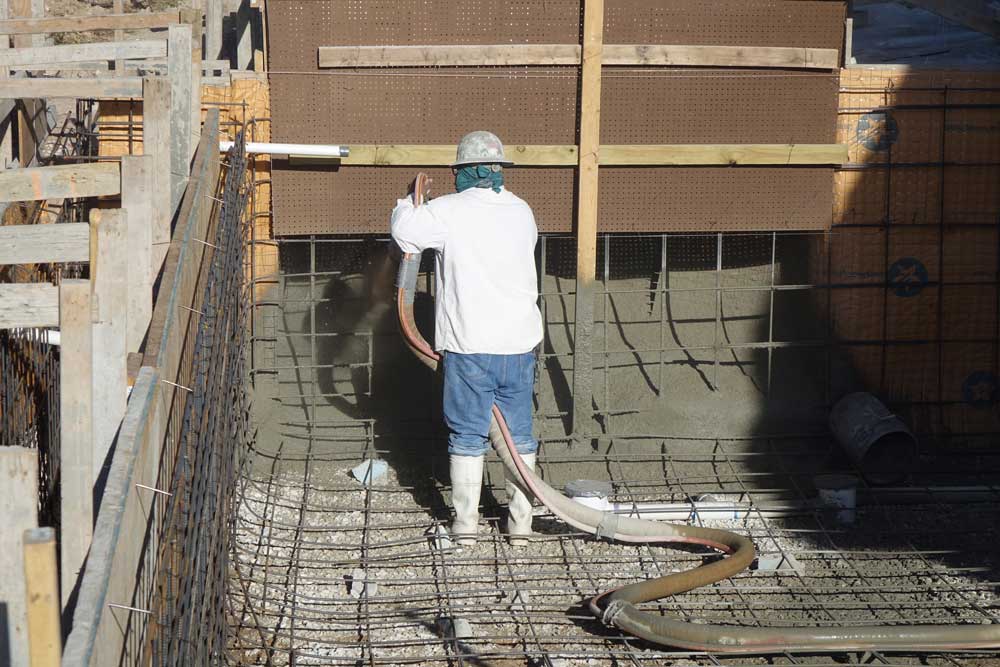
This stage is one of the most important in building an Infinity Edge pool. After the excavator has completed the excavation with remarkable precision, the formwork is installed for height and contour control. Next, reinforcing bars are laid out according to the future shape of the pool, and the pool is formed. Then, shotcrete (Gunnite) is sprayed over it, which, after hardening, forms the so-called pool shell. Finally, the pool finish is applied to this shotcrete shell, a coating consisting of small stones, sometimes also glass pieces and cement.
The composition of the particles, also known as pepples, determines the color of the pool water. A light layer of pepples, for example, produces turquoise-colored water, while the darker the coating, the darker the water becomes. My dear husband wanted dark-looking water, while I preferred the turquoise color. I gave in to him, but our pool builder or builders or both seemed to want to cheat us and used the cheaper light-colored pool finish. By the time we realized this, it was too late. One man’s joy is another man’s sorrow. We left it at that.
We opted for a negative edge so that the pool visually merges directly into the canal water. An overflow like this has a few disadvantages: You have to clean this small basin separately, the water doesn’t get as warm due to the constant exchange and the water consumption is higher than with a pool without an overflow because the water surface is larger in terms of evaporation. We opted for the look and accept the disadvantages.
First no spa, then one
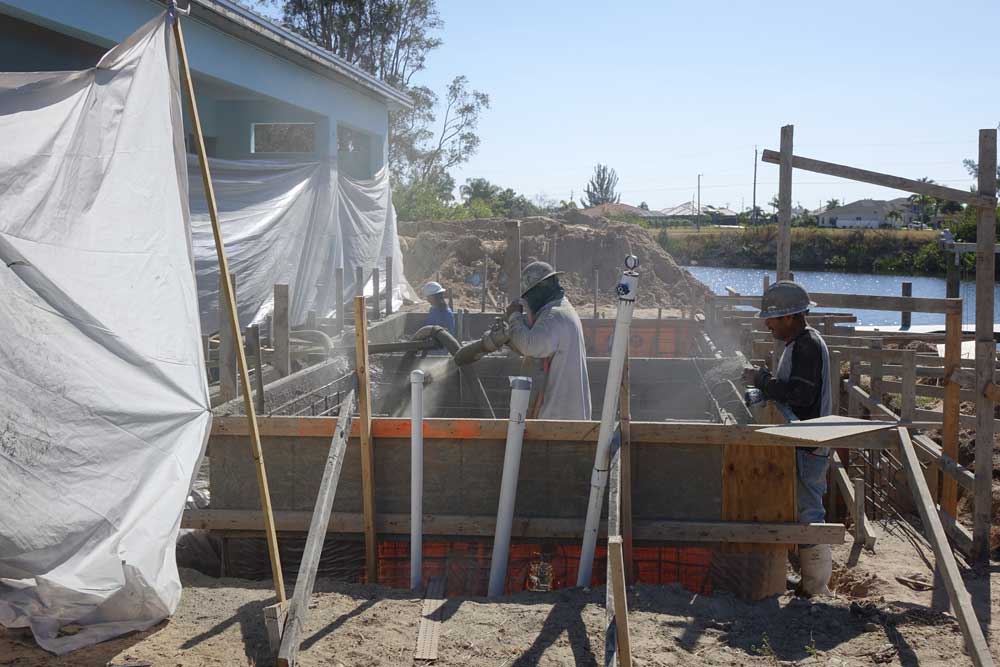 The concrete is sprayed. It’s quite a mess.
 The reinforcing bars disappear into the concrete.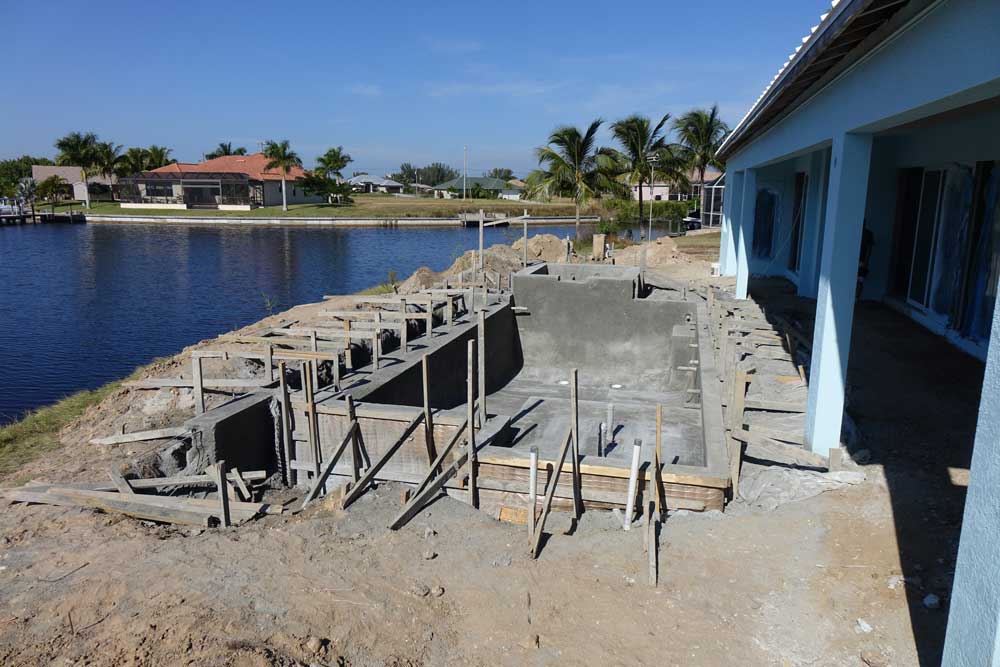
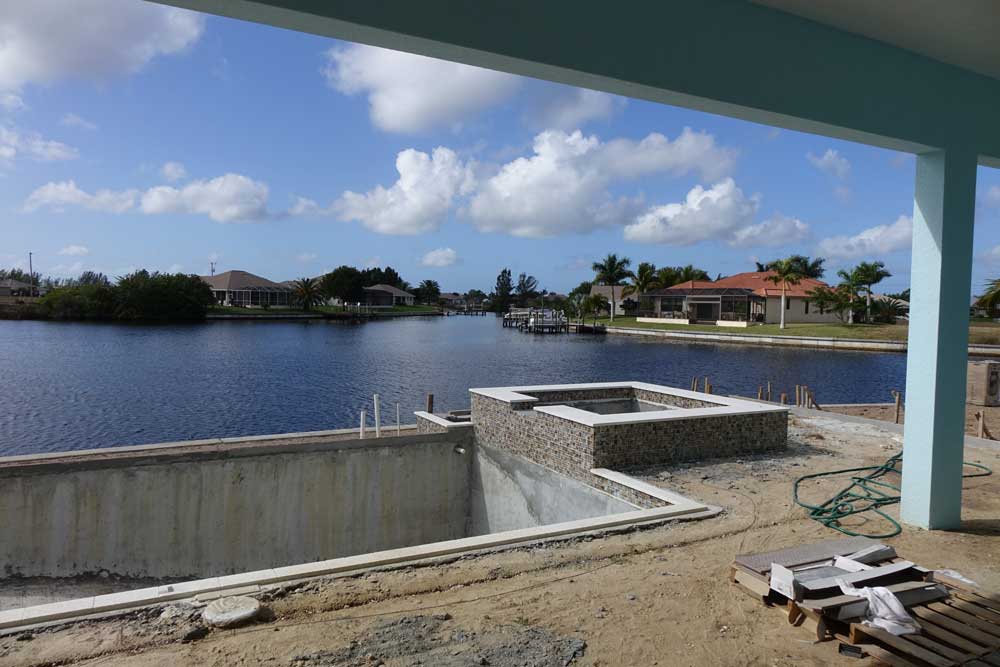 The edge flows are laid.
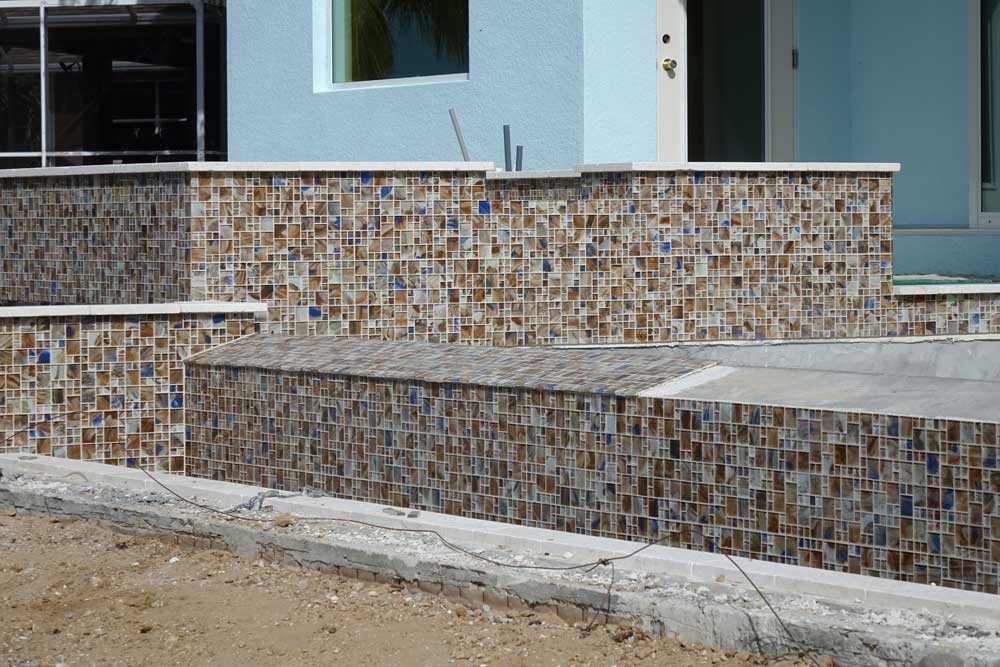 The tiled mirror is made of glass.
 The material for the pool finish is mixed on site.
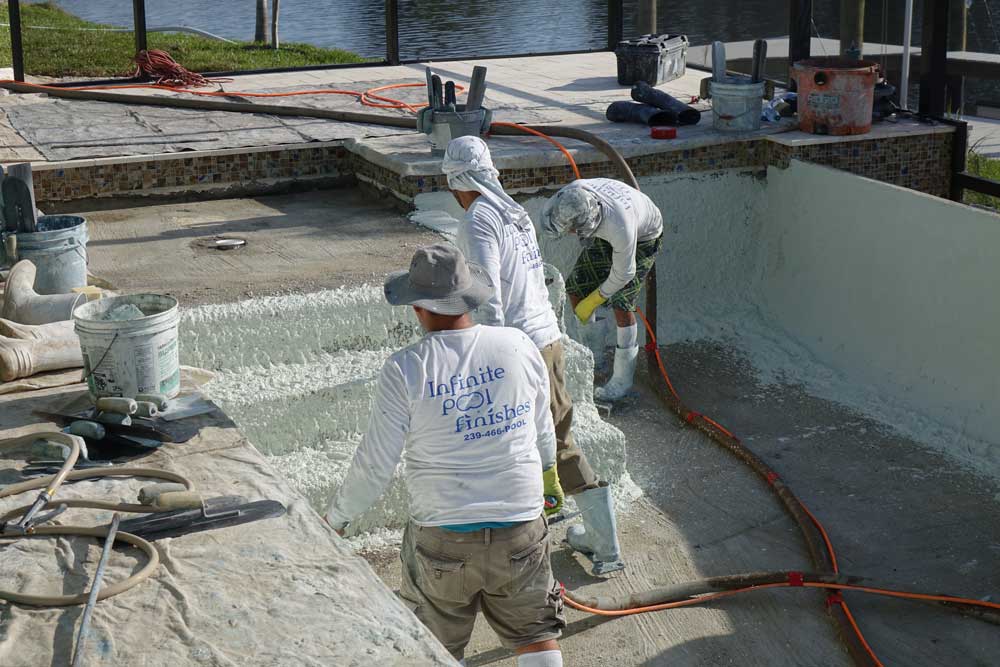 Splashing from the Pepples pool
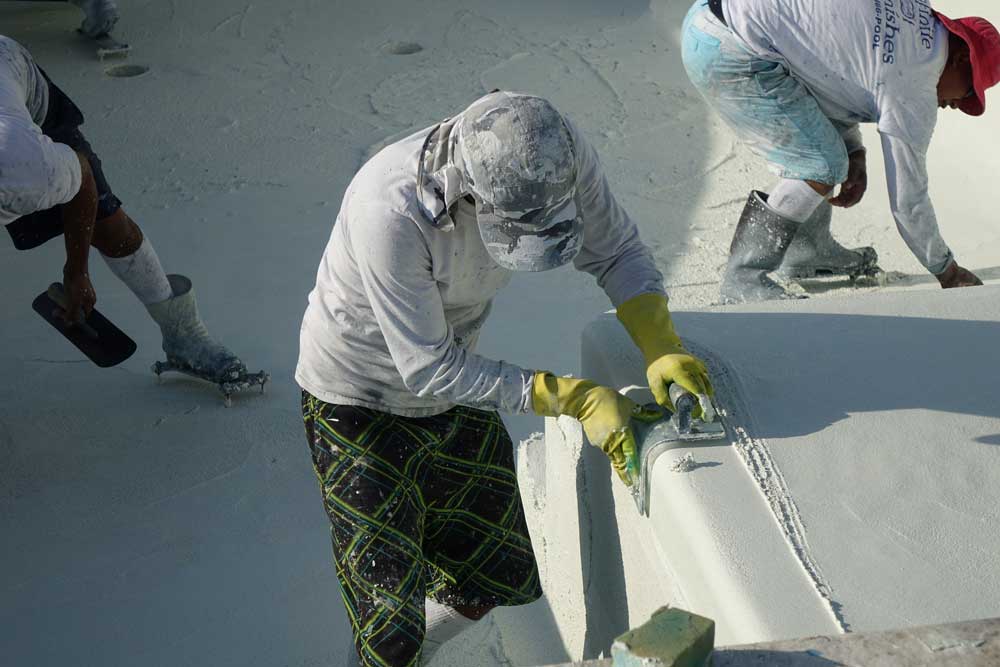 The light-colored Pool Pepples provides turquoise water.
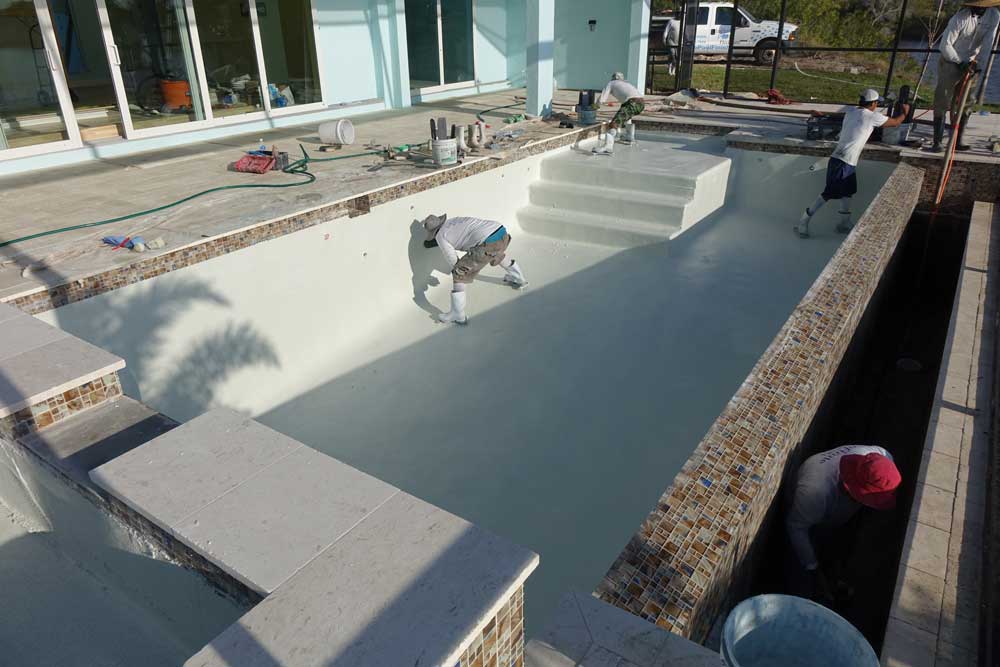 Finished pool finish
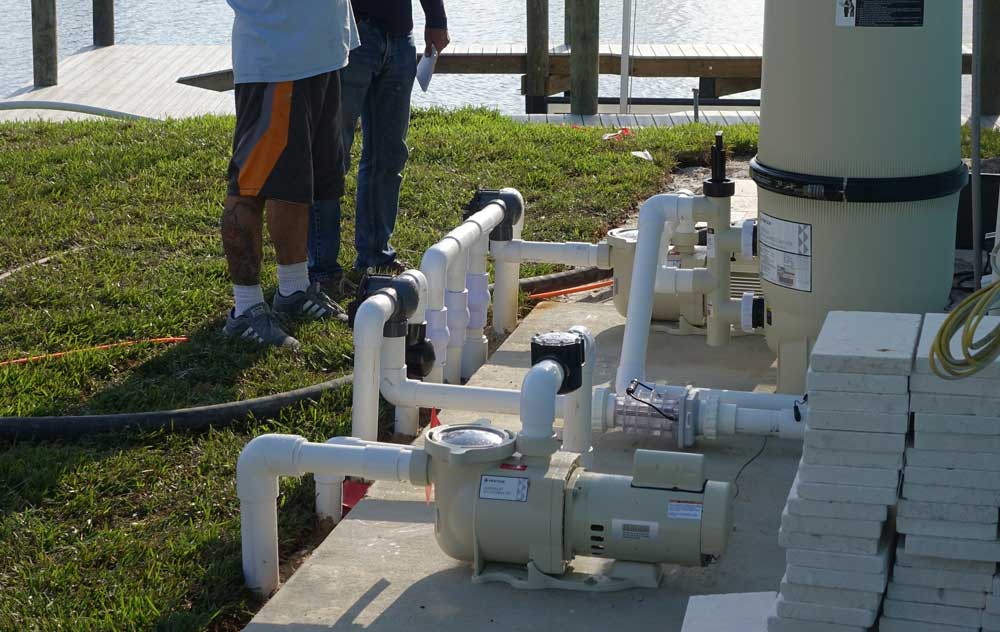 The pool technology
At first, we didn’t want a spa. During our many vacations in vacation homes, we didn’t really use the spa and felt that the investment was not in line with the benefits. But back then, we weren’t here during the winter months, when it’s nice to heat up the spa using the solar system and then relax in the warm bath water.
We only changed our minds at the last second and it was a good decision. Because especially in winter, when the solar system doesn’t manage to heat the pool water, it does manage to heat the spa to 90 to 100 degrees Fahrenheit (approx. 30 to 38° Celsius). It’s a bit like a thermal bath and very pleasant.
We have a suns shelf to start with. Small children and babies will love this and we have quite a few in the family. We also have eight solar panels on the roof that allow us to use the pool almost all year round, which is a saltwater pool by the way.
Do you need a cage?
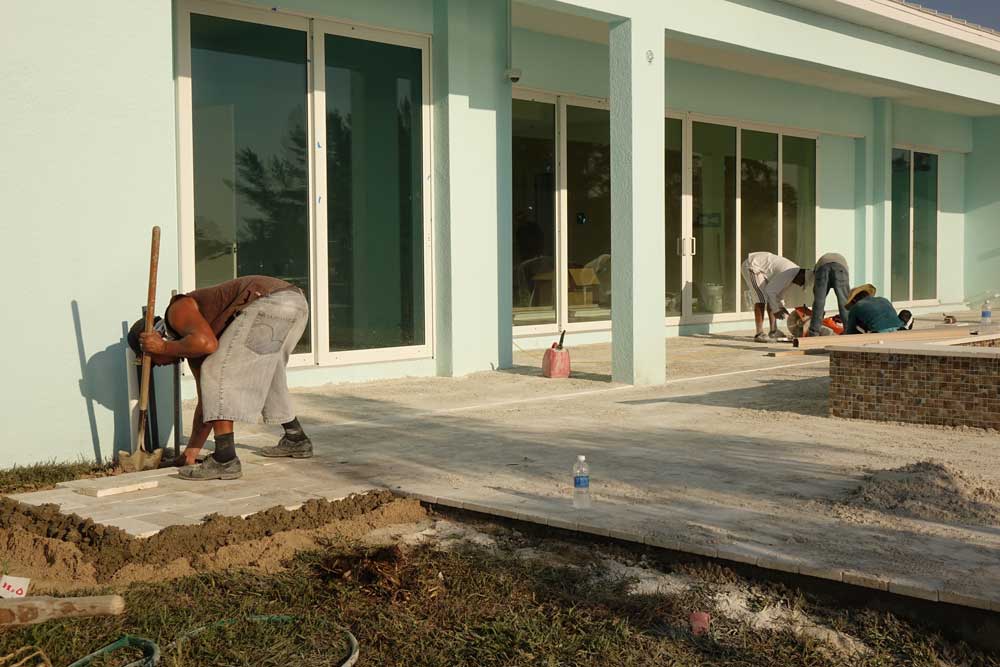 The travertine was laid in just one afternoon – unfortunately.
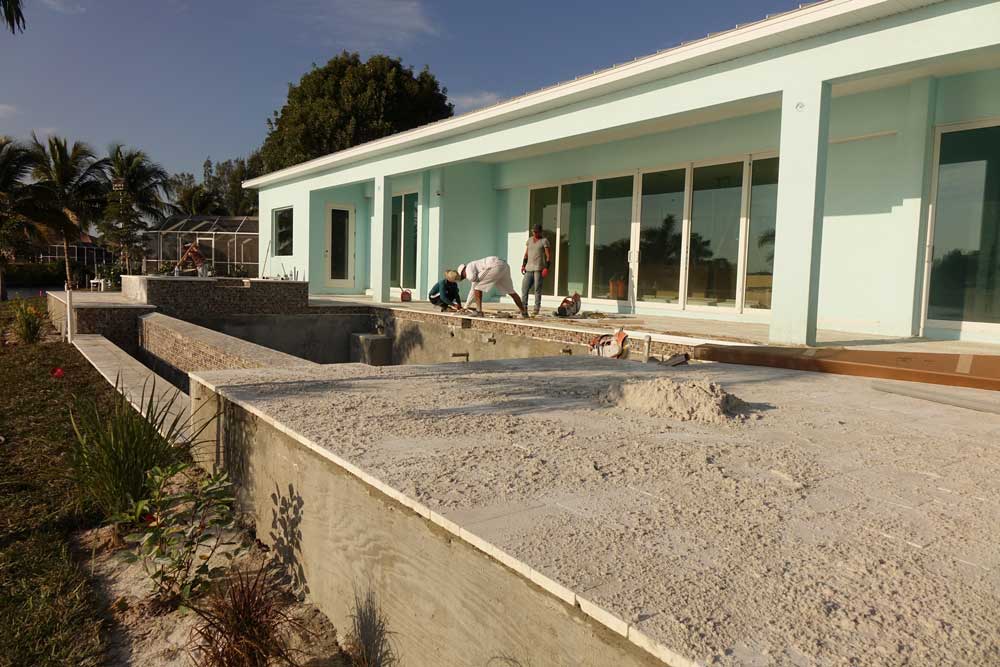 Later there were a lot of subsidence, the quality was not particularly good.
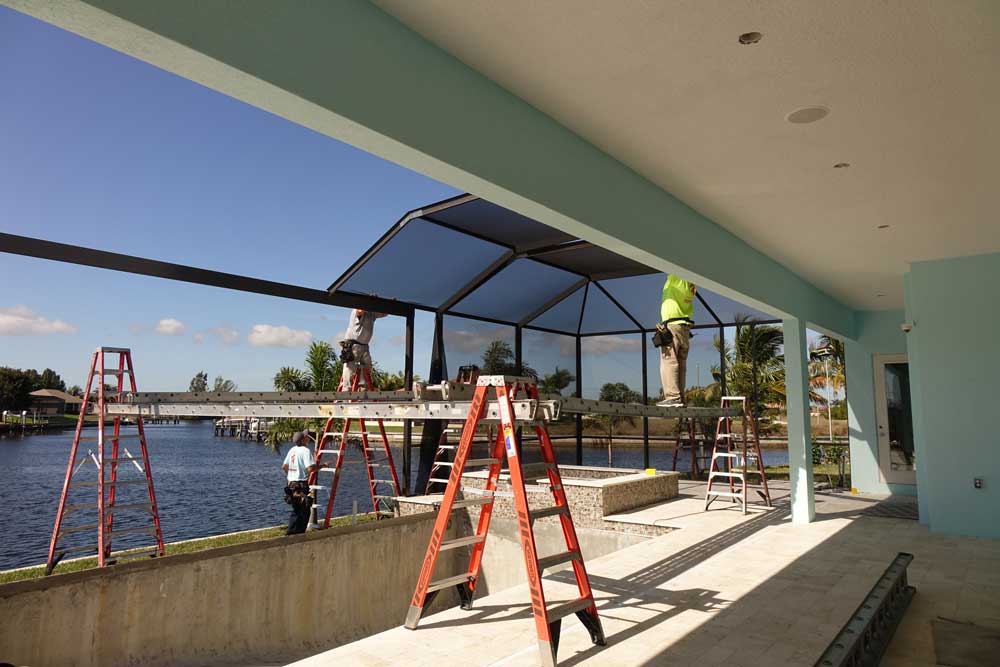 It feels like everyone has a cage.
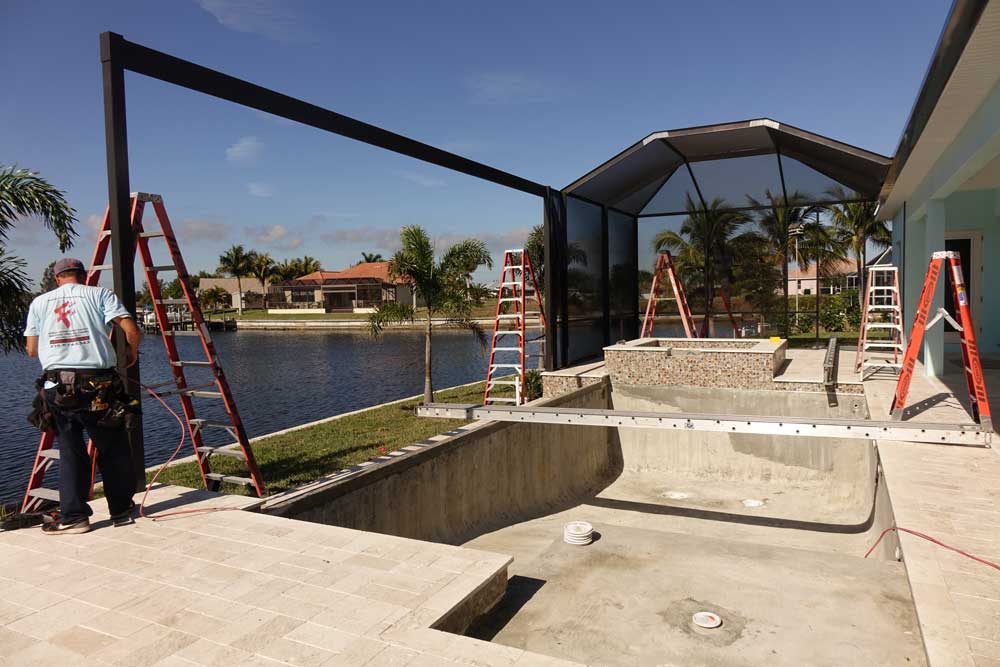 The Picture Window is worth its weight in gold for the view, but also travels quickly in a storm.
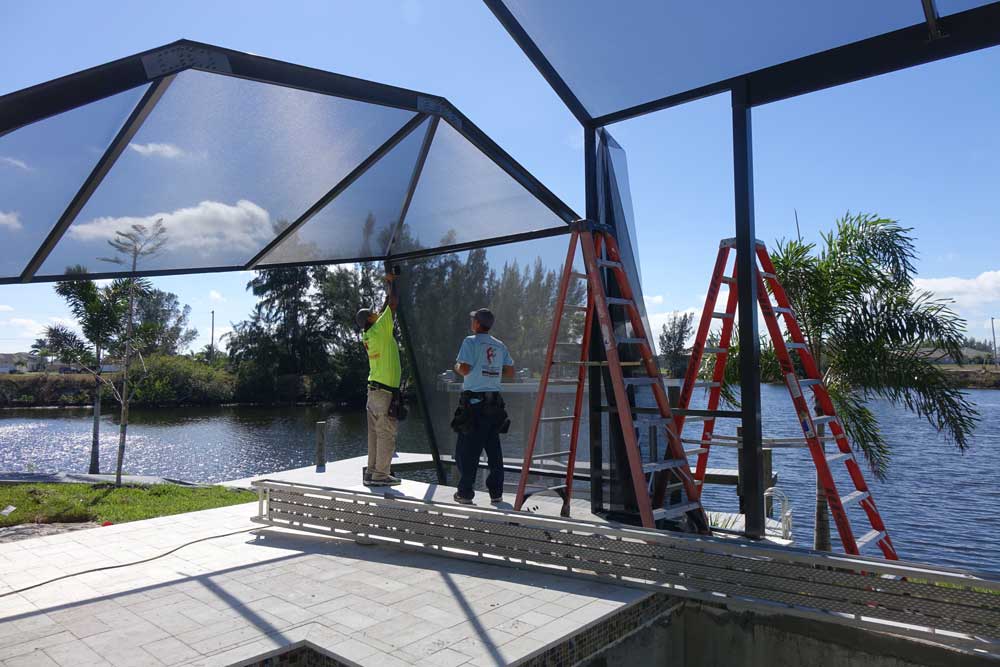 We only assemble the cage once.
In Florida many people have one, in Cape Coral it feels like everyone does: the cage. This is the screen cage that is supposed to keep the mosquitoes from tormenting the residents. So we had one built and soon regretted it. Just a few months later, Hurricane Irma came and tore our picture window apart.
As is always the case after such disasters, the craftsmen don’t charge less for the repair because they can afford it due to the good order situation, but they take advantage of their clients’ need and quickly double the prices. Replacing just the screen material cost us a whopping 1000 dollars at the time.
It got even worse in 2022 during Hurricane Ian. The cage, which is not insurable, collapsed completely and could no longer be rebuilt. A new cage would have cost 35,000 instead of 15,000 dollars when we built the house, which on the one hand we didn’t want to pay, and on the other hand we had an aha effect after the demolition.
It was so much nicer than with the cage that we decided not to have a new one installed. We are still so happy about it today and also have far fewer noseeums than before in the cage, because it couldn’t keep them out. Some of our neighbors, on the other hand, had the next repair work on Helene and/or Milton.
The saltwater pool
A saltwater pool is not a chlorine-free swimming pool, but a pool with slightly salty water (typically 2700 to 3500 ppm). In the salt water system, a salt chlorinator continuously generates chlorine by electrolysis. The dissolved salt is converted into chlorine gas in the cell, the disinfecting hypochlorous acid is produced in the water and after the reaction the chlorine returns to salt. The cycle is closed. In practice, you set the output of the chlorinator so that 3 to 5 ppm free chlorine is stable; the ideal pH is 7.5 to 7.8, cyanuric acid (CYA) at 60 to 80 ppm as UV protection.
The great advantage of a saltwater pool is the convenience: consistent disinfection without daily dosing, noticeably pleasant water with less chlorine odor and less need for chemical logistics in the long term. This is offset by investment and operating costs: The cell is a wearing part and typically needs to be replaced after 3 to 7 years. Electrolysis regularly drives the pH upwards, which is why it has to be corrected with acid. If the water is very hard, limescale can build up on the cell, which must be carefully removed.
Salt spray can attack metal parts and sensitive natural stone (e.g. travertine). Good sealing, earthing/sacrificial anode and rinsing after bathing are therefore advisable. However, the routine remains manageable: set the salt content, adjust the generator output, check the pH weekly, keep the CYA on target and inspect the cell occasionally. If you want convenient, constant disinfection and accept these few maintenance points, the saltwater pool is a very good solution.
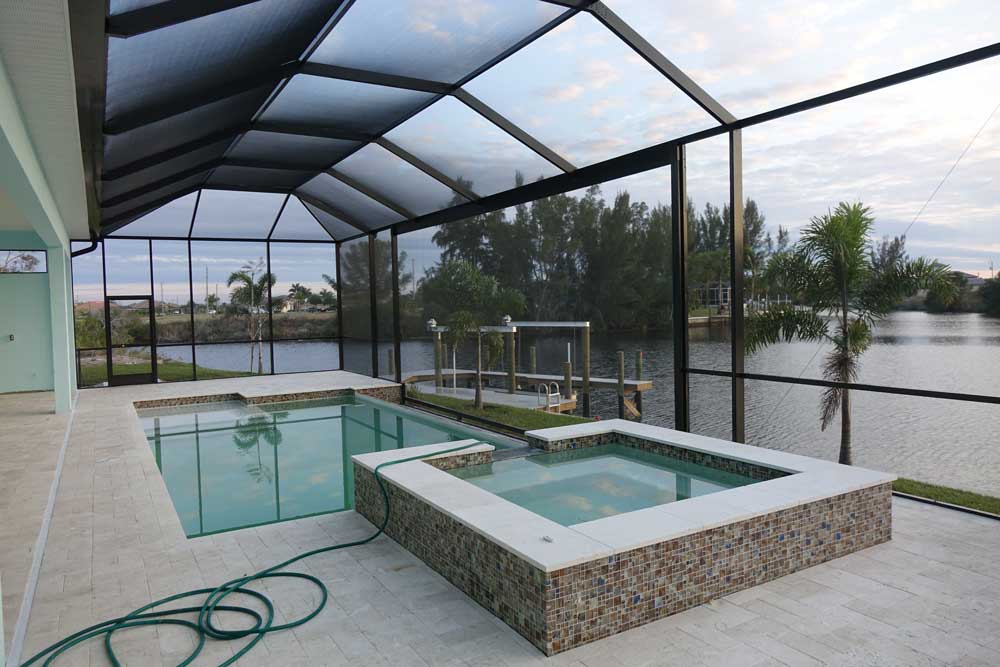 The pool water comes from our well.
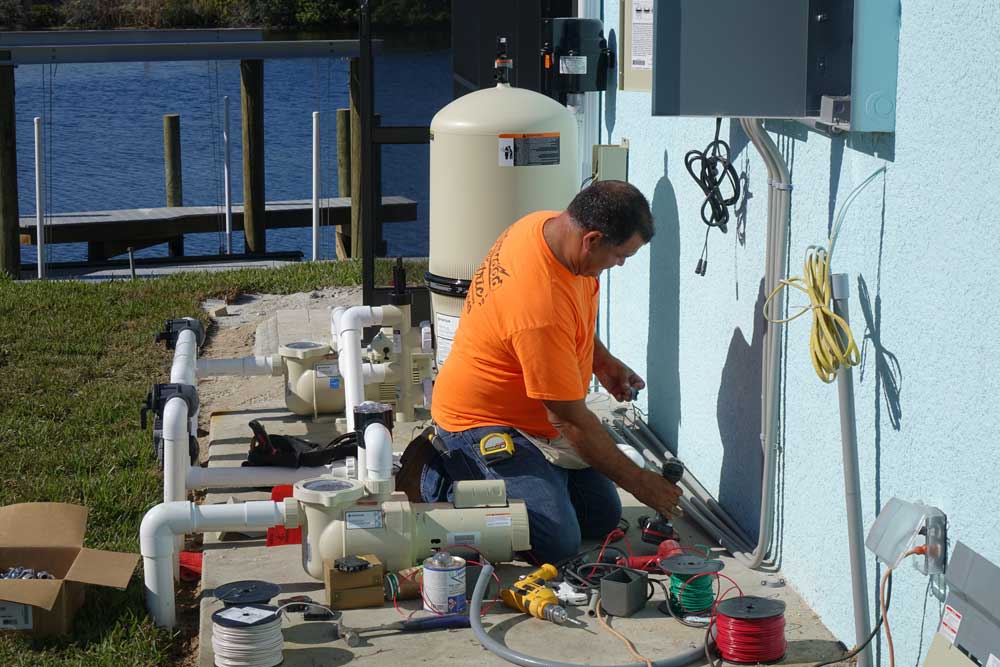 Final work on the pool technology
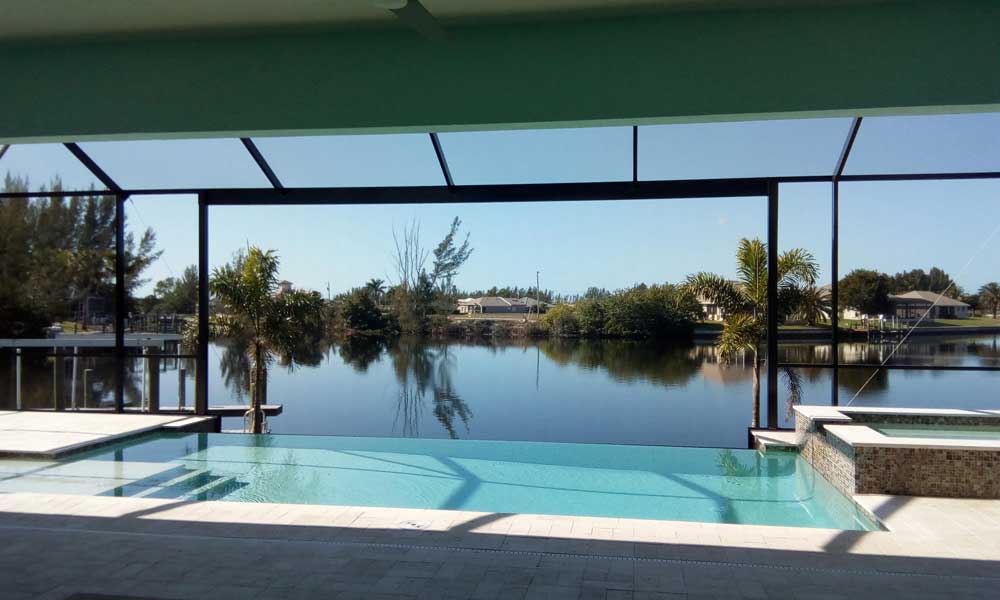 The pool is ready.
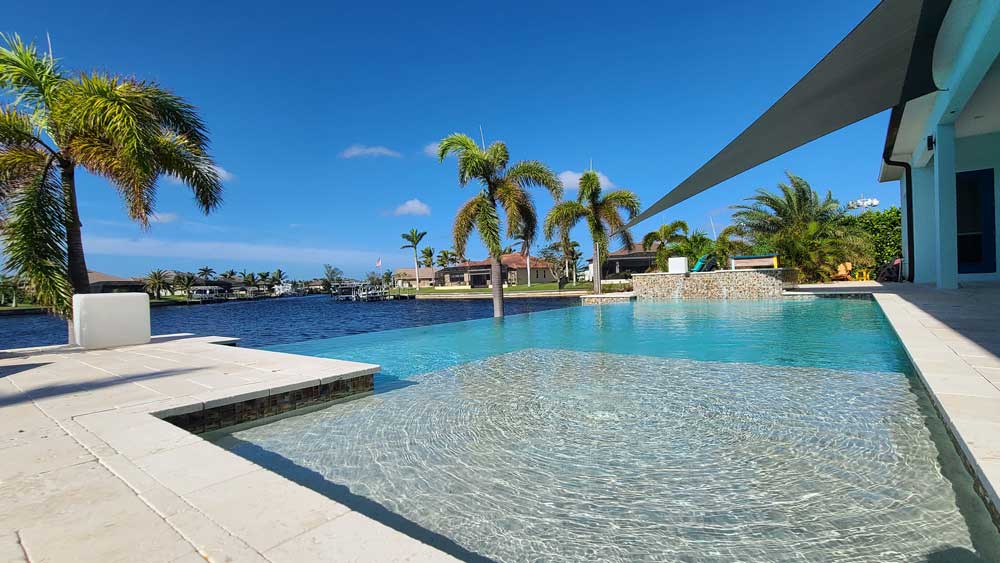 Years later without pool cage