Building and Finishing Walls the Florida Way
Drywall is the backbone of Florida interiors – quick to install, easy to finish, and perfect for the subtropical climate.
After the insulation, the drywall construction and plastering of the walls begins. Plasterboard panels are cut and cut out. They gradually turn the former floor plan into a room. This wall construction has a lot going for it: you can easily pull cables wherever you want, hang pictures or move walls in old buildings.
In a few days it will be light on the building site. The house is increasingly taking on the feel of a home. The walls are constructed using plasterboard. Special cement boards with a vapor barrier are used in the wet areas to prevent mold growth.
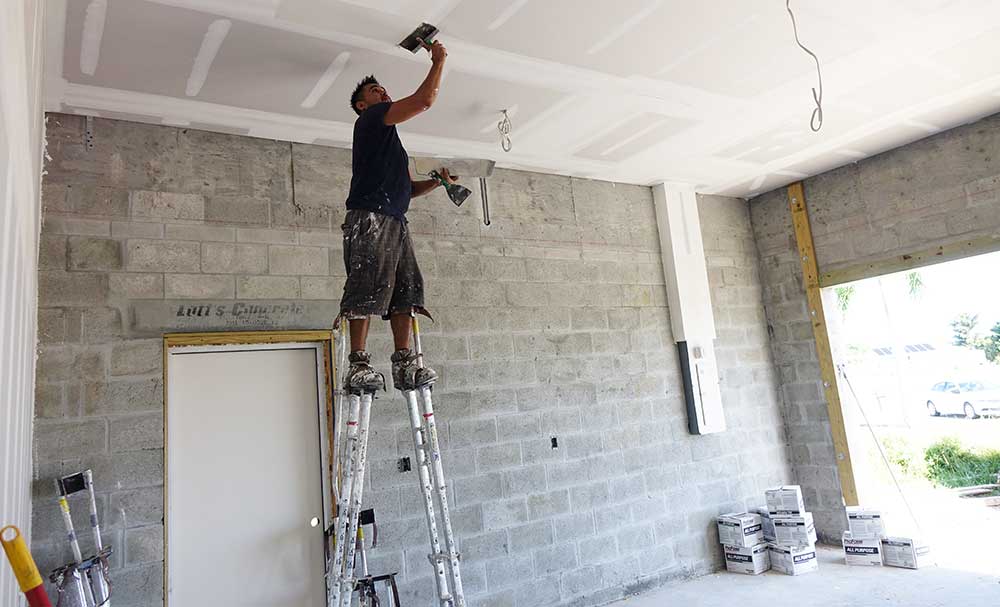
Once the wall construction with the plasterboard panels is complete, the joints and gaps are sealed. To do this, the plasterers put on stilts so that they don’t have to constantly climb up and down the ladder with the high walls and can move flexibly through the rooms. It’s really funny to watch and so practical. Within a few days, the house already looks quite homely.
Pictures Drywall and plaster walls
 The drywall work is finally underway.
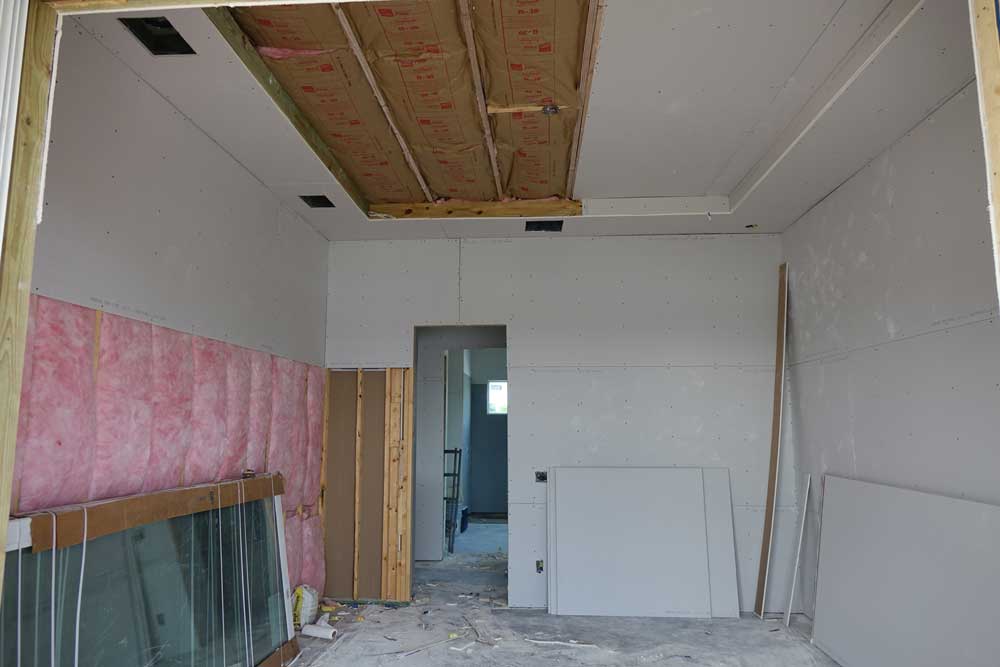 The interior walls are clad.
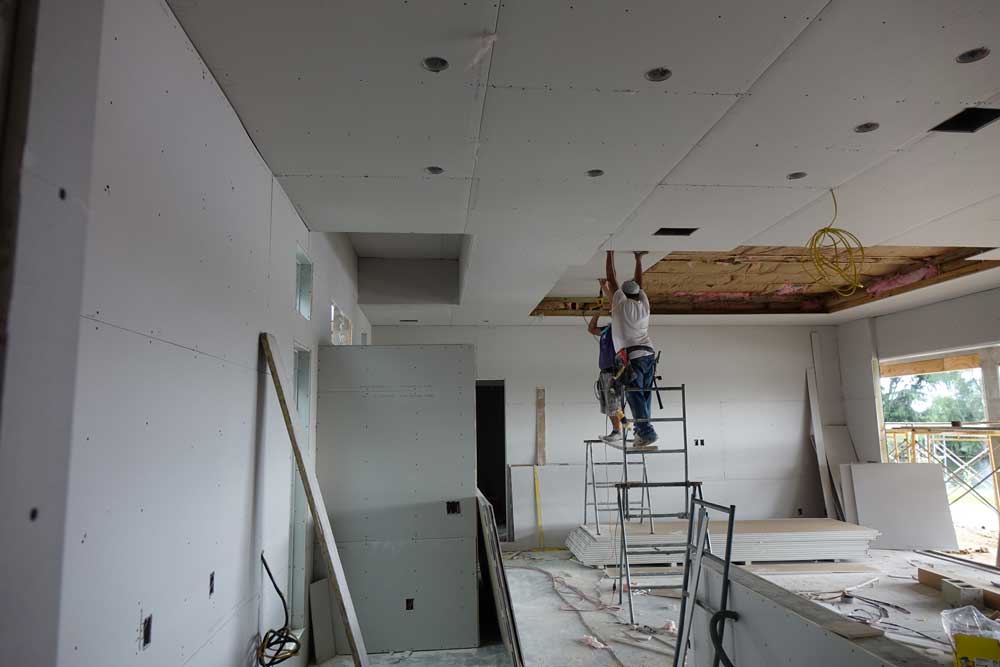 Covering the so-called step ceiling is quite an effort.
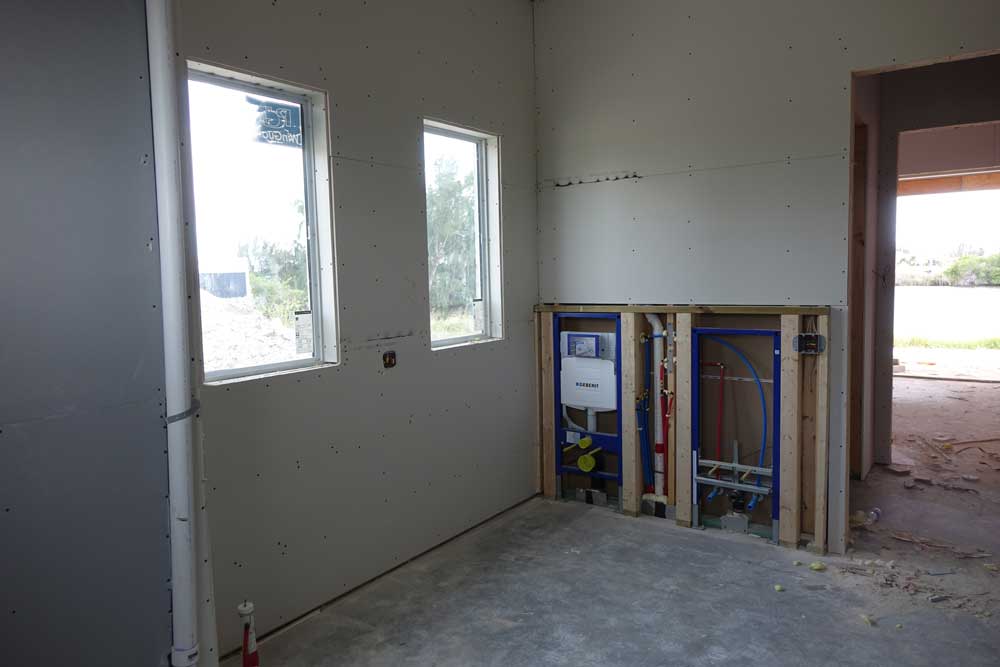 Dry construction in the bathroom
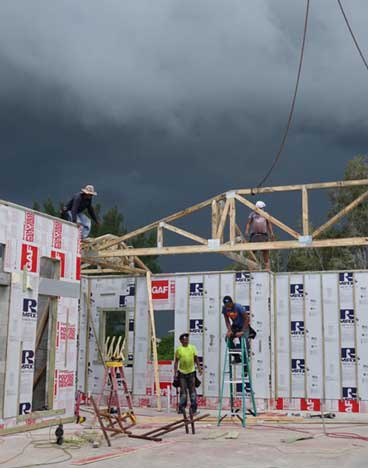
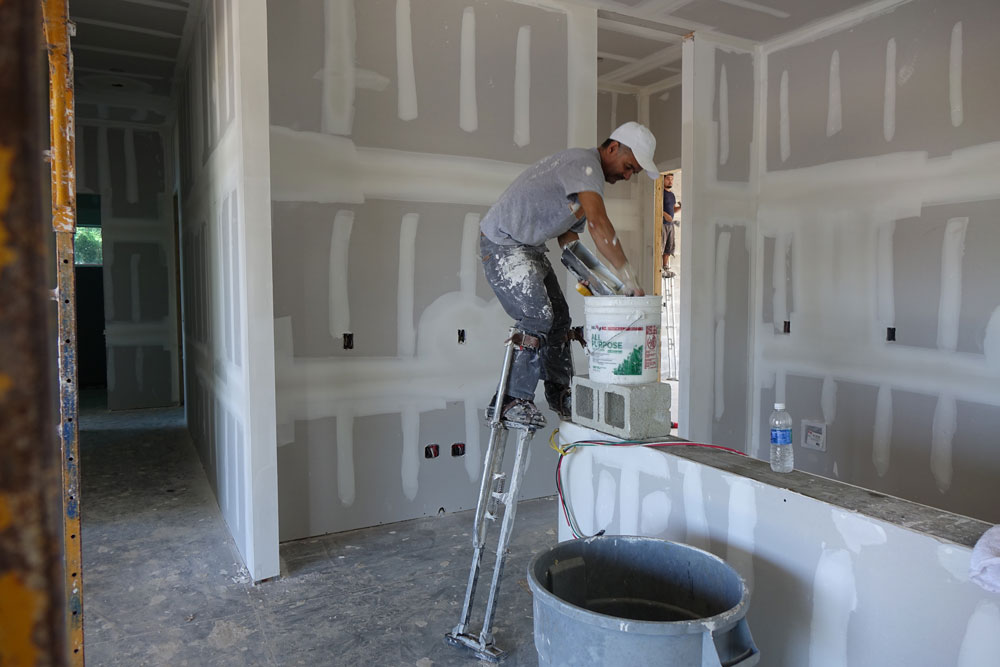 In the high rooms, the workers have to stand on stilts to plaster the walls.
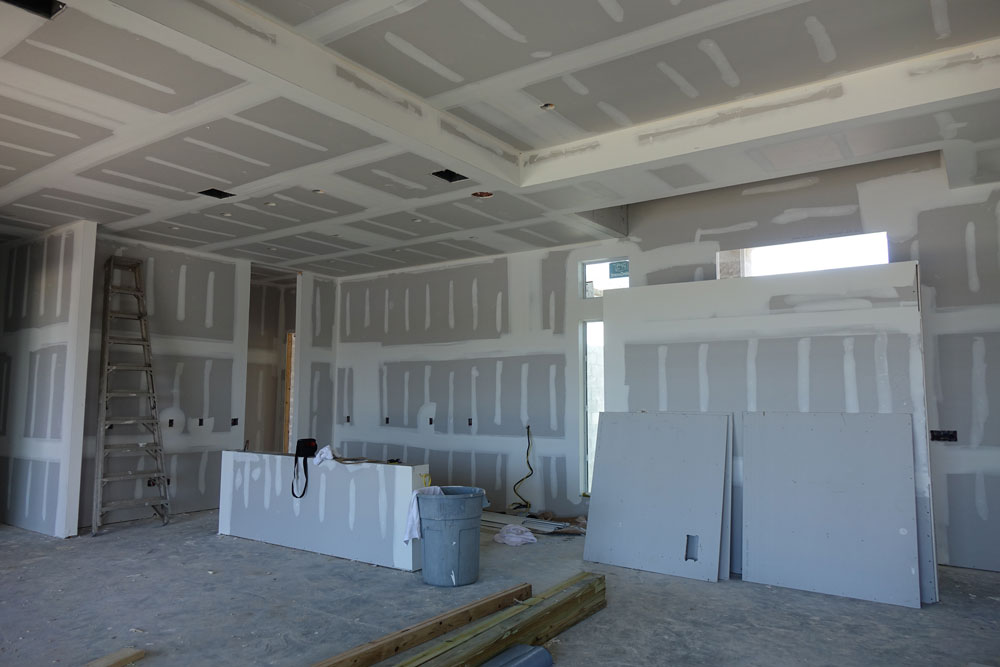 The kitchen with plastered wall panels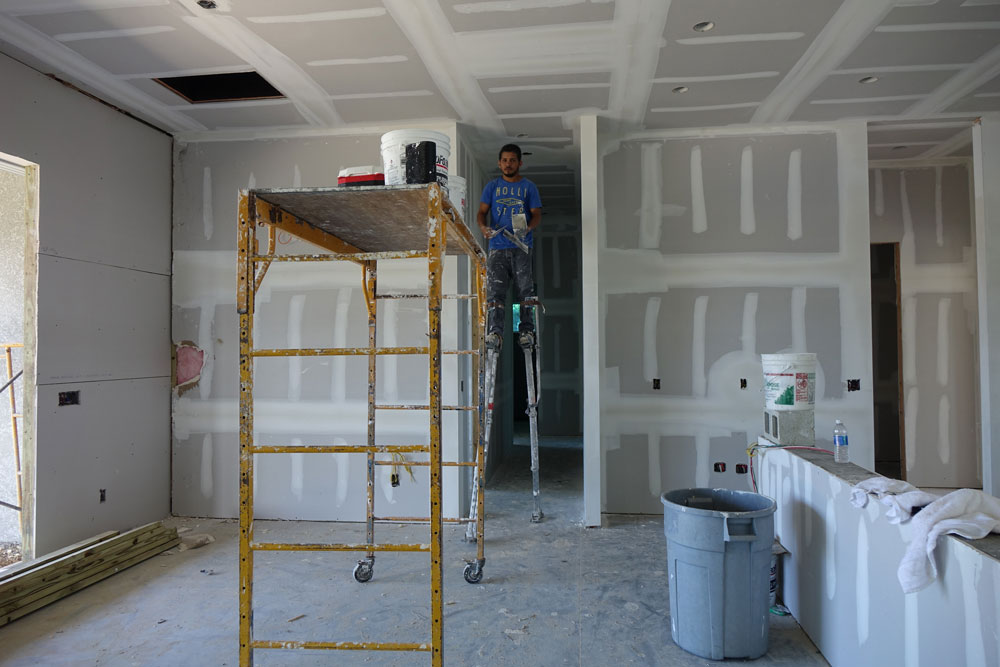
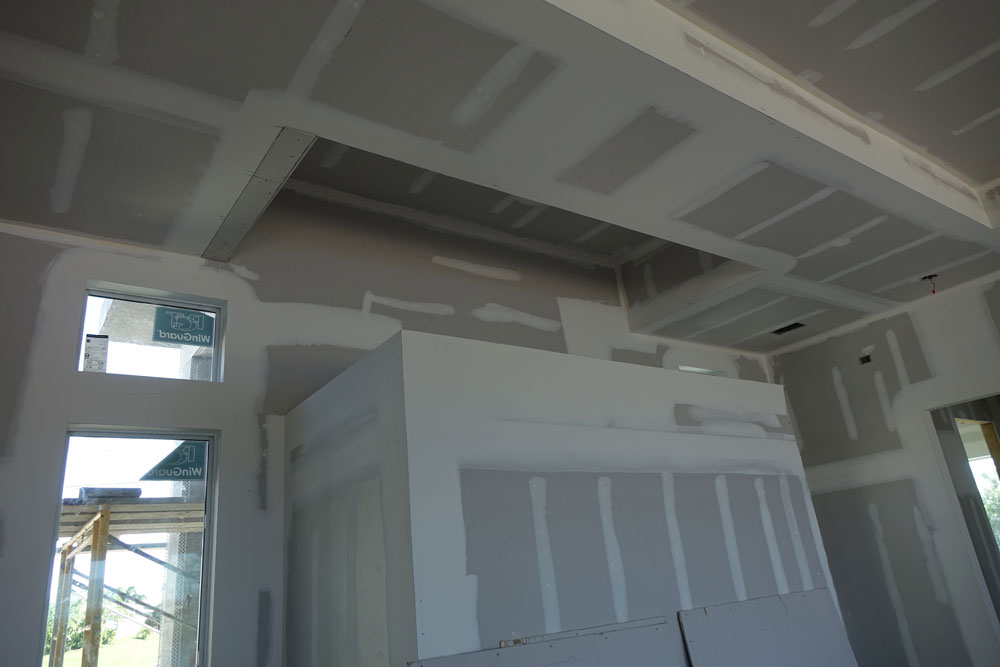 Walls also plastered in the entrance area
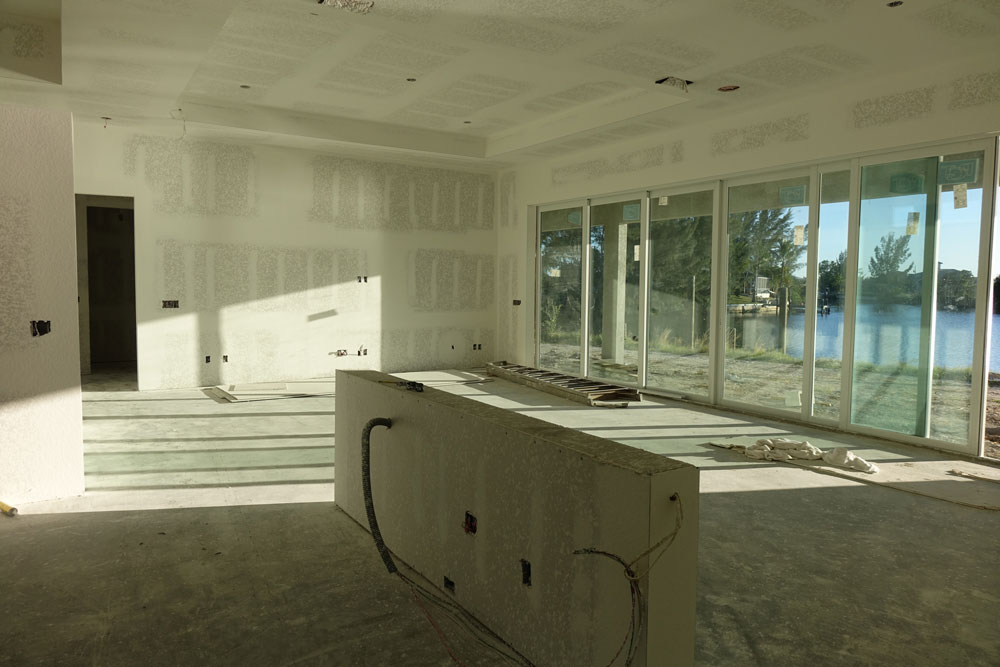 It’s getting light on the construction site.
In Florida, drywall construction almost exclusively uses ½-inch (12.7 mm) plasterboard sheets– so-called drywall sheets. These are screwed directly onto the wooden battens (furring strips) or the supporting stud frame using drywall screws. Metal or plastic corner protection profiles (corner beads) are used at external corners, which are later filled and sanded. For the ceiling, 5/8-inch boards (15.9 mm) are often used, which are more robust and less susceptible to sagging – especially with larger batten spacing.
In bathrooms, laundry rooms and kitchens, so-called green boards or purple boards are used instead of standard boards. These are moisture-resistant, have a water-repellent coating or even an integrated vapor barrier. In the shower itself, cement boards (Cement Board or Hardie Backer) are usually used – an important measure against mold growth.
After installation, the so-called “taping and mudding” phase follows, in which the joints are reinforced with a fabric tape and smoothed with several layers of joint compound – until an absolutely flat surface is created. Only then is it painted or plastered. This construction method is fast, flexible and typical of the USA – even if it cannot compete with solid interior walls in terms of sound insulation and stability. Anyone who attaches particular importance to peace and quiet should consider additional acoustic measures.