Domestic Water and Septic Solutions in Florida


In areas without city water, Florida homeowners rely on private wells and septic tanks for efficient water management.
Our house is being built in the northwest of Cape Coral and there is no city water there yet. So our domestic water supply will be provided by a so-called well and septic system. For the domestic water system to be installed, we first need the well and a septic system.
Let’s start with the construction of the domestic waterworks. The city water in our apartment building is so calcareous that every four weeks you can no longer recognize the sieve of the dishwasher under the limescale that has built up. So we are rather pleased that we have our own well. Unfortunately, this advantage won’t last, because in a few years Cape Coral will be installing city water here too.
All in-house systems are then switched off and the sewage treatment plant (Septic) is even broken. The costs for their installation are not replaced, but by then they have been partially amortized by the saved water costs. In return, you get to pay thousands of dollars for the city water system. Not nice, but you know that when you move to the northwest.
Drilling wells for groundwater
In the northern parts of Cape Coral – especially in the northwest – many properties are not yet connected to the central city water supply and the public sewage system. Instead, the houses are supplied with water from their own well.
This is a drilled groundwater well that is between around nine and thirty meters deep, depending on the location and geological conditions. Drilling the well usually takes less than a whole day. An electrically operated submersible or jet pump then pumps the water from the aquifer directly into the house.
As the raw water in this region often has a high degree of hardness and, depending on the location, can also have a sulphur smell, it is treated beforehand. First, it passes through a sediment filter that removes sand and coarse particles. A softening system with salt or potassium then ensures that lime and magnesium are filtered out of the water to protect pipes and household appliances from calcification.
In many households, an activated carbon filter is also installed to reduce odors and organic impurities. A reverse osmosis (RO) system is often used for drinking and cooking water. This filters up to 99% of the dissolved substances from the water and feeds it into a small pressure tank, from which it is drawn via a separate tap.
Septic system at the end of the domestic water circuit
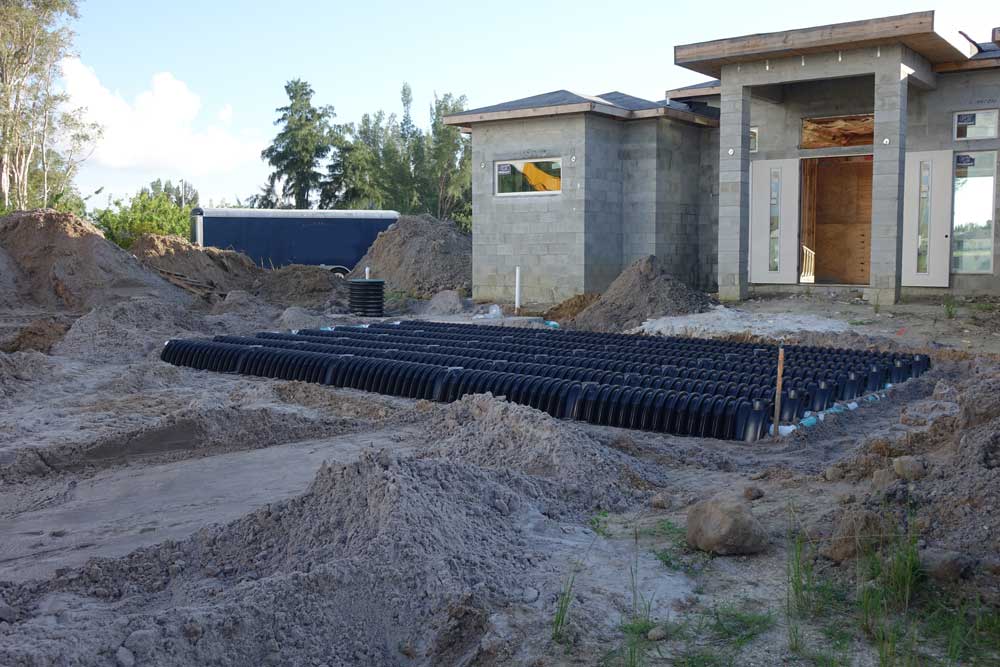 The septic system is installed in front of the house.
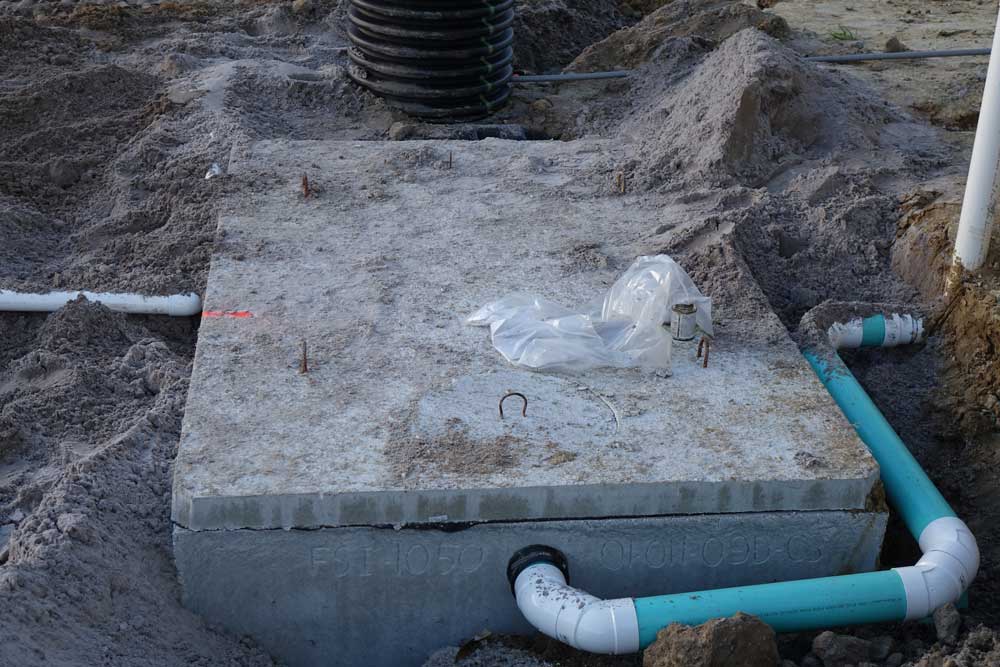 The waste water collects in the septic tank.
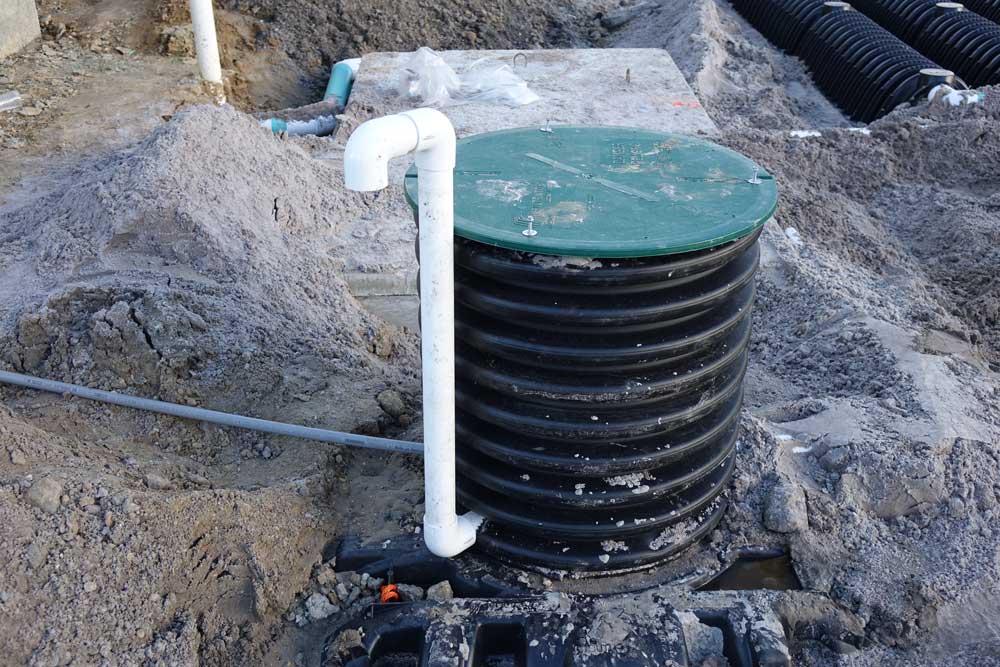 Pump shaft of the septic system
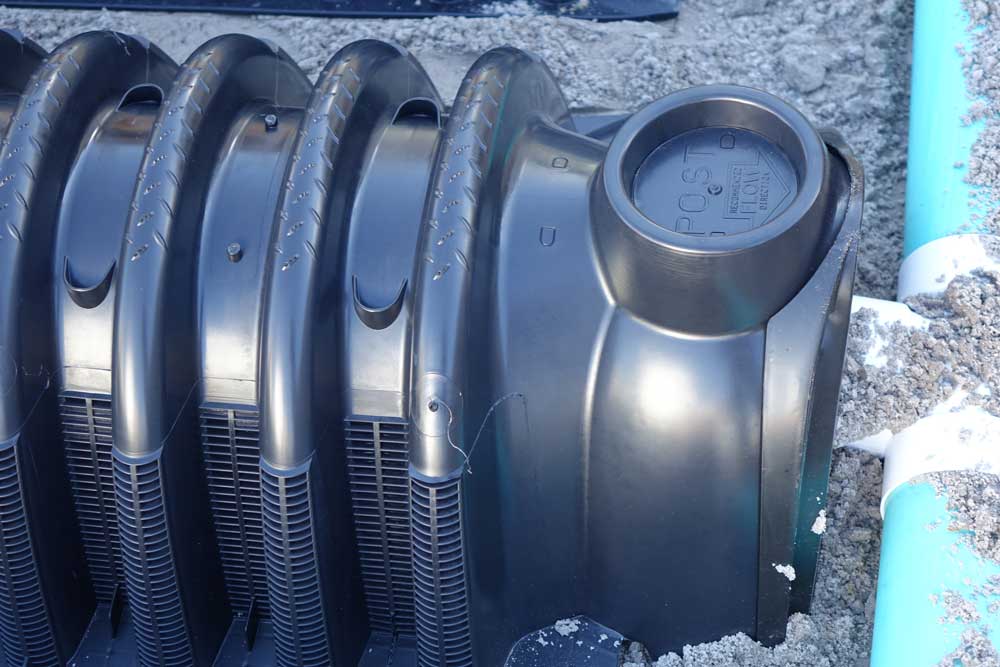 Drainage pipe connection in the septic system
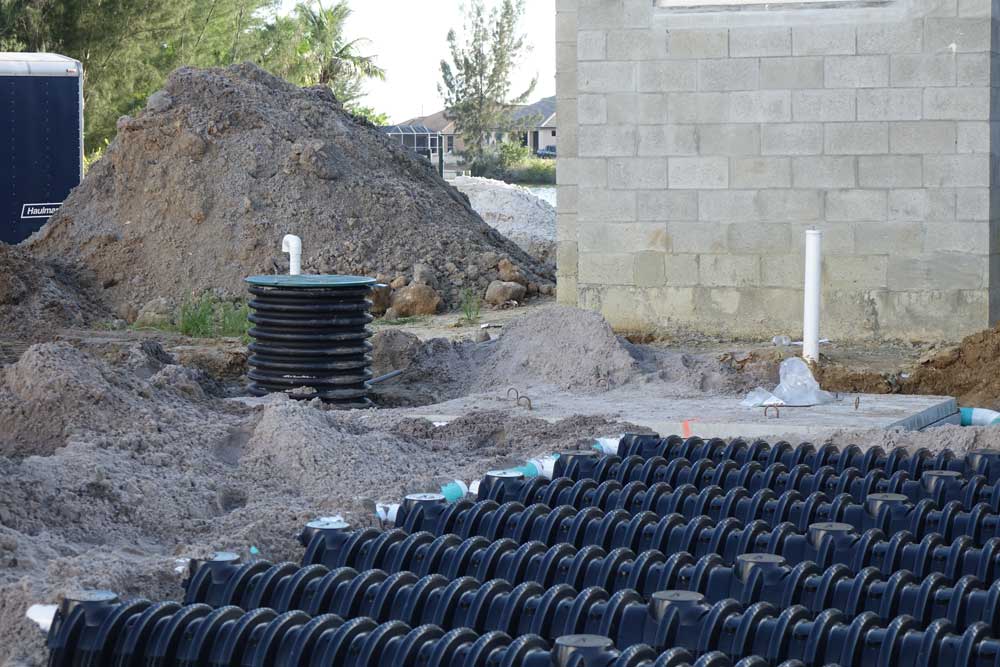 The pipes are buried in the ground. Nothing may be planted on them.
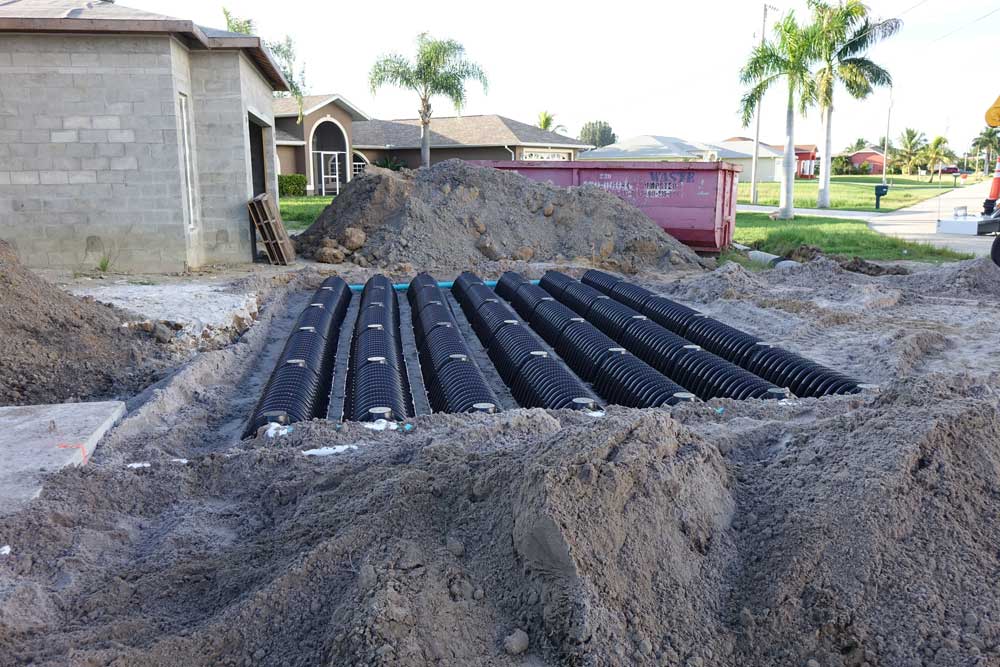 Drainage pipes
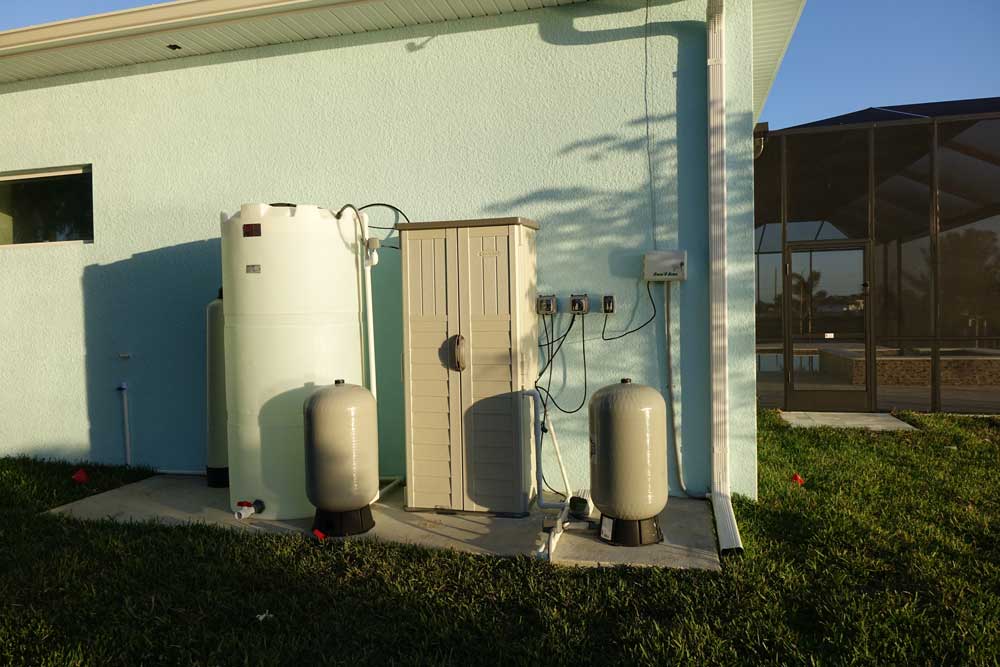 Water tank, pressure tank and reverse osmosis system in the cabinet with
The wastewater is not discharged into a public sewer, but is collected in a separate septic tank. Solids settle to the bottom, while grease and lighter substances float to the surface.
The pre-treated water in the middle then flows into a drainage field, an underground pipe system that allows the water to seep evenly into the ground. In order for the system to function permanently, the Septic Tank usually needs to be emptied every three to five years.
The septic system is installed in front of the house. This will clean our wastewater for the next few years and return it to Mother Nature. Countless microbacteria will be playing brownies here and decomposing the dirt particles. At first, we never wanted to build a house in this area because we absolutely wanted to be connected to the city water supply.
Today we are glad that we have well water . Because it is simply much better than the very calcareous and chlorinated water from the city. One day, however, we will also be connected to the city water supply and will have to do without the great well water.
The advantage of this system also lies in the low running costs, as there is no monthly City Water or City Sewer fee. Costs are mainly incurred by the electricity consumption of the pump, the salt and potassium consumption of the water softener, the replacement of filters and the regular maintenance of the Septic Tank.
In the long term, it should be borne in mind that connecting to the municipal water and sewage network will later be associated with high connection fees, which in Cape Coral are often between 20,000 and 30,000 US dollars.